The Fed: What Happened Next…

A month ago in “The Fed: What’s going to happen next? I suggested that you might consider that it doesn’t matter what the Fed does – it only matters how the drivers of price react to it. I went on to explain that we don’t need to know what the Fed would do but instead how the market responds to it. And, the market may not respond the way you expect. Trying to figure out what to do next based on what you think the Fed is going to do is a tough way to make portfolio management decisions. Prior to the announcement, it seemed the worry about it was based on what they would do, but all that really matters is how the price trends evolve of the positions you hold.

Most market participants didn’t seem to expect a taper. And, if a taper were announced, most seemed to expect stock prices would decline. After all, this Quantitative Easing program has been going off and on for several years now and when they’ve stopped it, stock indexes quickly dropped 10 – 20%. You may recall those declines in 2010, 2011, and 2012. Based on that historical precedent, it seemed to suggest stocks could be expected to fall when the Fed finally begins to unwind it’s massive bond-buying program to stimulate the economy. And, at some point it could even be a very significant decline since it appears this QE program has been a driver of stock prices since the 2009 low.

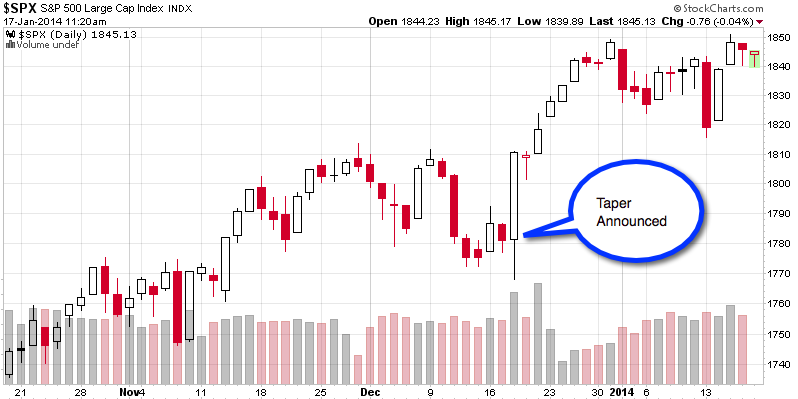
Later that day, the Fed announced that it would indeed begin to “taper” its bond-buying program. Although, The Federal Reserve’s $10 billion taper announcement doesn’t seem a significant cut in the central bank’s massive bond-purchasing plan. It’s still a taper and a taper is what those who talk on TV and write about it seemed to be afraid of. In fact, I mentioned in Fear is beginning to drive stock trends that investor sentiment measures shifted to fear and prices had dropped about -3% leading up to the Fed announcement. It seemed the market had anticipated some negative news and their fear “priced it in”.

Yet, the stock market index actually rose on the announcement instead of down. Maybe they overreacted leading up to the news and prices drifted back up.

stock market rally since fed taper announcement

In the chart below, we show a chart of global market prices since the taper announcement. Clearly, most global markets actually drifted up including the S&P 500 stock index ($SPX), U.S. Dollar ($USD), Developed Country International stocks (EFA), and even Long Term U.S. Treasuries (TLT).

global market returns since fed taper announcement

Commodities like the GSCI Commodities Index (GSG) and Gold (GLD) immediately declined, since commodities and gold typically trend inversely to the U.S. Dollar. And, Emerging Markets countries (EEM) have trended down – maybe because many of them are commodity producers.

Things don’t always turn out the way you expect, so having strong expectations about what’s going to happen next can make portfolio management very difficult. In fact, having strong expectations that reach the point of convictions lead to overconfidence and ego issues that causes one to stay with their losing positions. When you stay with losing positions, hoping they’ll turn around and prove your right, you get caught in a loss trap. That’s how you lose a lot of money.

I find an edge in going with the flow, the current trend, what is actually happening. It seems if we do that, we can never be wrong for too long. It’s OK to be wrong; it’s staying on the wrong side of the trend that becomes a problem. And doing that starts with too much beliefs and expectations about what’s going to happen next and being unable to reverse it.

Flow… just go with it.

When we know in advance what we’ll do next, we don’t have to try to predict in advance what’s going to happen next.

The Fed: What’s going to happen next?

Today the Federal Reserve meets and investors are talking about it even more than normal because the market wants to know what’s going to happen next. If the Fed will continue the same “Quantitative Easing” government bond-buying program, or will they taper it. Make no mistake about it, the Fed’s manipulation to the economy and capital markets is a serious matter and we’ll only know its true impact years from now. But in regard to its expectation of a positive near term impact on the economy it seems the bigger issue is whether or not the QE continues to work or run out of gas.

Investors, however, are mostly concerned about the capital markets impact: how their decision will drive the directional price of currency, bonds, stocks, and commodities. To that, you may consider that it doesn’t matter what the Fed does – it only matters how the drivers of price react to it. That is, if you are sitting around trying to figure out what’s going to happen next, you may consider that you don’t need to know what the Fed will do but instead how the market (people who buy and sell) responds to it. Will the participants in global markets respond with enough magnitude to shift prices in one direction or another? And, in what direction will they respond? If the Fed tapers, the direction will depend on if there is more buying demand than selling pressure to move the price up. Or, will they perceive it as negative? That is the trouble with trying to figure out what’s going to happen next and basing your exposure to risk on that guess. If you don’t have tomorrow’s newspaper today – you really don’t know. Since tomorrow isn’t yet here it doesn’t yet exist, so it is unknowable. If you guess it right, it doesn’t mean you have special powers. If you guess it wrong, that doesn’t mean anything either.

I don’t worry about what the Fed does or how currency, bonds, stocks, and commodity trends will react to it. I already know what I’ll do next regardless of what shifts the price from one direction to another. People often worry about things and experience what they fear the most even when it doesn’t happen. They worry because they are uncomfortable with uncertainty. Many things are unknowable and uncontrollable, so those things are surely uncertain. All we can do is control how we respond to it. I don’t wait until some news event to figure out what to do next. I always know at what price I’ll buy and sell. It isn’t determined by news, but instead based on the directional price trends of the world markets I trade.

risk management

Fear is beginning to drive stock trends

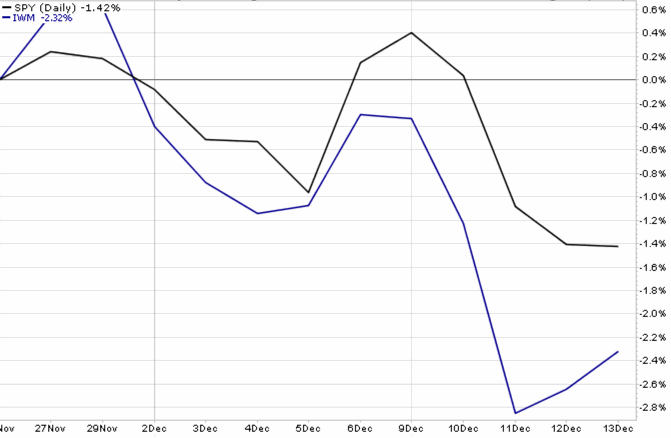
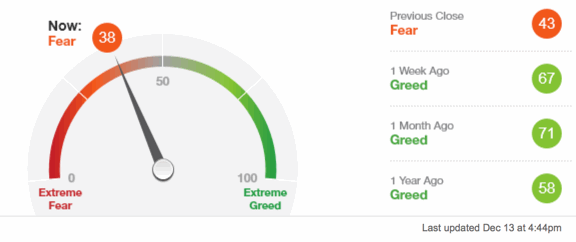
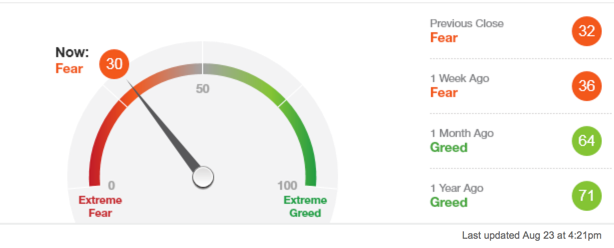
Since I pointed out that “Investors are Complacent” on November 27th, the S&P 500 index of large company stocks has declined -1.4% and the Russell 2000 small company stock index more than -2%. Both are small declines so far, but it was enough to shift the return driver from Extreme Greed in early November to Fear as of the close on Friday.

S&P 500 and Russell 2000 decline

S&P 500 and Russell 2000 decline

Fear is now driving stock prices. Although, it isn’t yet at an extreme level, I like to point out these oscillations of fear and greed investor behavior because investors feelings are often the wrong feeling at the wrong time. That is, after prices have gone up investors get more greedy and optimistic. Then, after prices decline just a little they become fearful of losing more money. I believe some investors are more oriented toward either fear or greed, but many actually suffer an emotional roller coaster: they oscillate between the fear of missing out and the fear of losing money. That is a real problem when they feel the wrong feeling at the wrong time.

Such investor behavior is also a significant driver of price trends. For example, a waterfall price decline occurs from “Serial Correlation”. That is, waterfall declines happen because prices go down, then down some more, as more and more investors sell because they are losing money. Panic selling is serial correlation: selling occurs because prices are falling. For example, investors lose 20% and then begin to exit their positions to avoid further loss. That leads to other investors losing 25% as selling pressure drove prices down more and they exit their positions to avoid further loss. The nice thing is we all get to decide how much we are willing to lose. You can’t lose 50% without allowing it. This can also be an advantage for robust trend systems designed to profit from directional drifts up and down.

Now that Fear has become the return driver, we shouldn’t be surprised to see prices move back up. However, the investor sentiment hasn’t yet reached Extreme Fear, so all the sellers who want to sell may not have yet sold. The simple Fear and Greed Index dial I use here isn’t a timing signal. Instead, I use it to point out how sentiment shifts from Fear to Greed via a website everyone can see. I actually use other indicators to measure sentiment and counter-trend points. But you can use the Fear and Greed Index to discover how your own feelings may oscillate between emotions.

From this point, Fear can continue and reach a more Extreme Fear level and prices can keep going much lower. However, if the sellers that wanted to sell have sold and prices have declined low enough to bring in new buying demand prices will move back up.

Madoff wasn’t a hedge fund

Bernie Madoff is back in the news lately as it’s now been 5 years since he was arrested for the largest Ponzi Scheme. For some reason, the name is commonly linked to “hedge funds”. Yet, the Bernie Madoff scam wasn’t a hedge fund, his company was a registered and regulated brokerage firm called Bernard L. Madoff Investment Securities. Madoff founded the Wall Street brokerage firm Bernard L. Madoff Investment Securities LLC in 1960. Some large hedge funds lost money because they had invested in Madoff’s managed account. They had Madoff managing some of their funds money. But Madoff Investment Securities LLC wasn’t a hedge fund.

If you had an account managed by Bernie Madoff at Madoff Investment Securities LLC  you would have had an account owned and titled in your own name. You would have gotten trade confirmations from Madoff Investment Securities LLC when he bought or sold. You don’t get that in a fund. You don’t know when a fund buys or sells. His investment program, then, offered the appearance of transparency – you could see what he was doing at any time.

As it turned out, the appearance of transparency enabled the thief to defrauded customers of approximately $20 billion over several decades. You see, Madoff’s investment program was a fraud, and the reason he was able to do it is that:

1. He was the portfolio manager: he made the trading decisions.
2. He owned the broker that executed the trades (as it turned out, they were fake; he didn’t do trades).
3. He owned the custodian: the custodian and broker was the same company.

Since Madoff Investment Securities LLC was the portfolio manager, broker, and the custodian, that allowed him to pretend to do trades and print trade confirmations and statements with fake information on them. Madoff Investment Securities LLC was regulated and registered as a brokerage firm, just like Wells Fargo Advisors, Edward Jones, Schwab, Morgan Stanley, and other brokers. You can probably see how the real issue was that his program was a fraud and he was able to do it because he controlled the trading decisions, trade confirms, account statements, and custody, because his company did it all. What if he had been required to custody an another company independent of his? he would have had to convince the other company to participate in his scheme which would likely have gotten him busted sooner. Most investment companies aren’t a fraud, so they would likely report him. Madoff was large and respected – but don’t think that made it any safer.

Whether you invest in a separately managed account or a private investment partnership, require that they use multiple service providers that are independent of each other instead of all one company. For example, your portfolio manager is an asset management firm, the broker is a different company that executes the trades and the custodian is a separate company that holds the securities and handles the cash in and out. Then, require it be audited by even another independent company. For example, if you enter into an investment management agreement with ABC Capital Management, LLC that firm is the portfolio manager and the agreement gives it authority to buy and sell in your account. Your account should then be held at a financial institution registered as a broker or bank like Folio Institutional, Trust Company of America, or JP Morgan. You deposit money to that financial institution that holds your money and they send you statements. ABC Capital Management, LLC is just trading the account independently and shouldn’t have custody of the money. If the investment program is a “hedge fund” instead of a separately managed account then it’s typically structured as a private investment partnership, say: ABC Fund, LP. A private fund is operated like a business – the business is trading for profit. You review a Private Placement Memorandum that explains every detail of ABC Fund, LP. When you invest, you sign a “Subscription Agreement” instead of an investment management agreement. You wire the deposit to the bank account of ABC Fund, LP and that money is then wired to the funds brokerage account. It’s best to require the fund to have a “third party administrator” who acts as the funds controller and accountant. That third party administrator is who accounts for your investment and sends you statements showing the value of your investment. You can probably see why you want the administrator to be a third party – independent from the fund manager. Then, the fund is audited annually to verify the administrators accounting is accurate. When ABC Fund, LP is a private investment partnership, it should be operated like any other major business with multiple investors. It has a bank account that sends/receives wires, a custodian that holds securities, a broker that executes trades, a third party administrator that does the accounting and creates profit and loss statements, and an independent accountant that audits all of it. Those should be separate companies independent of each other, not one.

Unfortunately, most of the smaller scams we hear about are even worse than the Madoff scheme. The investors write a check to “John A. Doe” which isn’t even a company at all. I don’t think any legitimate investment program has you writing a check to the individual portfolio manager. Deposits should be made to an independent bank or custodian and statements should come from that custodian. In fact, it’s even better to wire the funds rather than write a check. But “You can’t fix stupid”. There will always be Madoff-like scams and people stupid enough to write them a check. If you simply require that all the service providers be separate companies you won’t be one of them.

Investors are Complacent

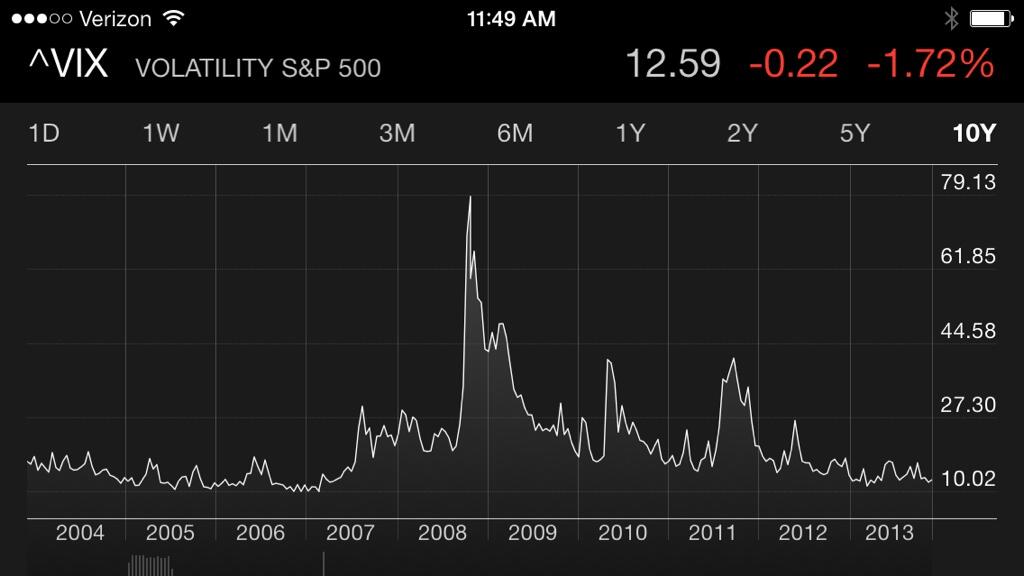
Implied volatility, the amount of “insurance premium” implied by the price of options, continues to suggest that investors are becoming very complacent. When the VIX is high or rising, it says the market expects the S&P to move up or down more. When the VIX is low or declining, it says the market expects the S&P 500 will not move up or down as much in the future. That is, the “insurance premium” priced into options on the S&P 500 stocks is low. That isn’t necessarily directional – it is an indication of the expected range, not necessarily direction. However, what I know about directional price trends is that after a price has been trending directionally for some time, as the S&P 500 stock index has, investors become more and more complacent as they expect that trend to continue. The mind naturally wants to extrapolate the recent past into the future and it keeps doing it until it changes. When we see that in the stock market, it usually occurs as a directional trend is peaking. Investors are caught off guard as they expected a tight range. If the range in prices widens, they probably widen even more because they are – and it wasn’t expected. Interestingly, people actually expect inertia and that is one of the very reasons momentum persists as it does. Yet, momentum may eventually move prices to a point (up or down) that it may move too far and actually reverse the other way.

Image

If we believe the market is right, we would believe the current level accurately reflects the correct expecation for volatility the next 30 days. That is, we would expect today’s implied volatility of about 12 – 13% will match the actual historical volatility 30 days from now. In other words, 30 days from now the historical (backward looking) volatility is match the current implied volatility of 12.6%. If we believe the current volatility implied by option premiums is inaccurate, then we have a position trade opportunity. For example, we may believe that volatility gets to extremes, high or low, and then reverses. That belief may be based on empirical observation and quantitatively studying the historical data to determine that volatility is mean reverting – it may oscillate in a range but also swing from between one extreme to another. If we believe that volatility may reach extremes and then reverse, we may believe the market’s implied volatility is inaccurate at times and aim to exploit it through counter-trend systems. For example, in my world, volatility may oscillate in a range much of the time much like other markets, except it doesn’t necessarily have a bias up or down like stocks. There are times when I want to be short volatility (earning premium from selling insurance) and long volatility (paying premium to buy insurance). I may even do both at the same time, but across different time frames.

The point is, the market’s expectation about the future may be right most of the time and accurately reflect today what will be later. But, what if it’s wrong? If we identify periods when it may be more likely wrong, such as become too complacent, then it sets up a position opportunity to take advantage of an eventual reversal.

Of course, if you believe the market is always priced accurately, then you would never take an option position at all. You would instead believe that options are priced right and if you believe they are, you believe there is no advantage in being long or short them. I believe the market may have it right most of the time, but at points it doesn’t, so convergence trades applying complex trade structures with options to exploit the positive asymmetry between the probability and payoff offers the potential for an edge with positive expectation.

Fear and Greed

FEAR

GREED

What emotion is driving the market now? Extreme Greed

Today I observe the Fear and Greed Index below is at an “Extreme Greed” level.

Fear and Greed Index Investor Sentiment 2013-11-07_07-58-24

source: http://money.cnn.com/data/fear-and-greed/

Investors tend to get optimistic (and greedy) after prices have gone up and then fearful after prices go down. I am not necessarily a contrarian investor. I mainly want to be positioned in the direction of global markets and stay there until they change. But markets sometimes get to an extreme – increasing the probability of a reversal. My purpose of pointing out these extremes in investor sentiment (fear and greed) is to illustrate how investors’ feelings oscillate between the fear of missing out (if global markets have gone up and they aren’t in them) and the fear of losing money (if they are in global markets and they are falling). Fear and greed is a significant driver of price trends. When stock market investor sentiment readings get to an extreme it often reverses trend afterward.

For example, the last time I pointed out an extreme measure was August 27, 2013 in “Investor Sentiment Reaches Extreme Fear” when the Fear/Greed dial suggested “Extreme Fear” was the return driver.  I said when we see these extremes in fear it happens after prices have fallen. Prices can keep falling after it gets to such an extreme, but we often see the directional price trend reverse back up after an extreme fear measure. What I think is useful about observing extremes in sentiment are to understand how investors behave at certain points in a market cycle. If you find you have problems with this behavior, you may use it to modify your behavior.

Below is a chart of the S&P 500 stock index and I have marked August 27th which was the date I observed the “Extreme Fear” reading. As you can see, indeed that was a short-term low and prices climbed a wall of worry since then.

Investor Sentimennt Extreme Greed August 2013

source: http://www.stockcharts.com

Today, the investor sentiment is “Extreme Greed” as the driver of prices, so we’ll see in the coming months how that plays out.

Getting Technical about Supply and Demand

I will first warn that for most investors, zooming in and watching it too closely will more likely lead to a bad outcome. I’ve observed over the years that one of the most common problems of poor investor decisions is watching it too closely – as if it changes the outcome. They end up experiencing every move and reacting to them emotionally. They oscillate between the fear of missing out and the fear of losing money. Since most markets like the stock market can easily swing 5% or more up or down 3 or 4 times a year, they ride an emotional roller coaster. Ultimately, most investors should focus on the primary trend, which I define as a period of 3 – 12 months or more, and that necessarily means accepting some swings.

With that said, I wanted to share a very simple illustration of how I observe the battle of buying and selling pressure (supply and demand) play out visually using charts. We can consider this a continuation of my last post. I have communication with a very wide range of investors, traders, and portfolio managers. Let’s first define those titles. An investor is someone who invests in something; it could be a position they’ll hold for income like commercial real estate or it may be an investment program that is traded on their behalf. An investor is probably looking at 5, 10, or 20-year time frames. A portfolio manager is a person who makes buy and sell decisions within a fund or investment program. A portfolio managers’ time frame depends on their strategy. A portfolio manager can also be seen as a trader, because a trader makes trades, but my traders execute my decisions by executing the trades for me. Then, a trader trying to get the very best price at that moment is focused on tick-by-tick price trends; seconds, not days.

It’s fascinating how different the views of all of these people can be, whether it’s a market maker trading options, a veteran long-term trend follower whose been doing it for decades, or an individual investor who spends some time in the evening reading the headlines. How well their activities help them depends on their true level of expertise and experience – and it takes a lot more of it than people think.

I find that those of us with a very strong understand of how supply and demand is reflected in price action have a better sense of the current conditions and understanding of the market state. Those without it seem to be sitting around trying to figure out what’s going on and what to do next. Sitting around trying to figure out what’s going on and what to do next is like someone handing you the keys to a yacht on the Tennessee River and asking you to take it to the Gulf Coast of Florida and on to the Bahamas. If you are a skilled Captain with a plan of how you’ll time getting through the locks and where you’ll stay overnight, it will be the trip of a lifetime. If not, then I guess you’ll spend a lot of time sitting around trying to figure out what’s going on and what to do next and that’s going to be a gut-wrenching few weeks. And, it could be very costly.

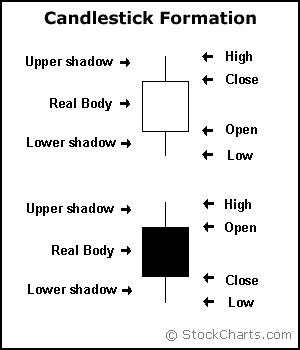
You can probably see my line of thinking as I show you this simple illustration of supply and demand playing out in price action. It gives us a glimpse of how we view what is going on. In the image, you can see the “Candlestick Formation” of a price action of a single day. We borrowed this image from our friends at www.stockcharts.com and if you click that link later it will take you directly to their “Introduction to Candlesticks”. The thin lines are the “shadow” and the larger box is the “Real Body”. If the color is white or green, it closed higher than it opened. Take a close look at the high, close, open, and low of the day to see how they are marked on the “candle”.

candle1-formation

I am going to point out a very simple explanation of what this means. To understand what it means, thinking about what it represents. We see the opening price is marked, then the high of the day, then the low it traded that day, and then the price it closed. That is the full range of the days price action. If we looked at the chart in seconds, weeks, or months, it would be the range over that time frame.

Below is the last 10 days of the S&P 500 stock index price action represented by the  SPDR® S&P 500® ETF, which is a fund that, before expenses, generally corresponds to the price and yield performance of the S&P 500® Index. That is, the ETF is tradeable while the index itself is not.

S&P 500 2013-10-24_08-00-42

Source: https://stockcharts.com/h-sc/ui

As you can see in the chart, these are candlesticks and they have real body’s and the thin line shadows. Yesterday is the last candlestick – the one with a red body with more line below the body than the top. candlesticks with long lower shadows and short upper shadows indicate that sellers dominated during the first part of the session, driving prices lower. You can see some other days with upper and lower shadows (the thin line) that are about the same, so buyers and sellers moved the price high and low and then settled about where it opened. Sometimes we see candlesticks with a longer upper shadow and shorter lower which indicates that buyers dominated during the first part of the day, driving prices higher. You can probably begin to see how a deep understanding price action can help us define the current trend direction and identify reversals. It gets far more involved when we start thinking about how the days interact with each other and requires more than reading a book and looking at charts a few years to gain some skill at using it to understand what is going on, but this may give you something to ponder. Of course, creating information is one thing, the ability to make it useful is another. But the basics really isn’t that complicated though people often get too caught up in requiring patterns and outcomes to be perfect.

At the end of the day, you can probably see how this tells us want actually happened that day…

A gap down from here would confirm a short term S&P 500 trend reversal

ImageI actually wrote this at 1pm but wanted to wait to publish it after the close to see if the pattern I observed at 1pm would be intact at the close. It wasn’t, but I decided to publish this anyway and add an additional point: there is real information in price action and it doesn’t have to be perfect, especially if there is additional confirming information. These candlestick patterns mark potential trend reversals, but require confirmation before action anyway. Even though the close wasn’t exactly a Shooting Star, I still believe the price action suggests the same potential outcome if it is confirmed by lower prices.

Technical analysis of price trends include chart pattern recognition to determine what is likely to happen to a price trend over time. The most useful patterns are reversal patterns. Price data viewed on a chart is a visual representation of supply (selling pressure) and demand (buying pressure). Like other things, the direction of price is ultimately determined by supply of it and demand for it. When there is a greater demand for something its price will rise if supply stays the same. When demand declines, its price will fall. Buying pressure, then, is ultimately the primary driver of prices to the upside and selling pressure is what drives price down. A person with expertise and experience in price trend pattern recognition can study the charts pattern and gain an understanding of what is going on: buying or selling pressure. We can use that to define the direction of the trend and also identify probable reversals in the current trend. That is, determine the most probable price movements based on an examination of past price movements. Of course, price trends are always in the past. The only data of any kind we can ever study is past data; never future data that doesn’t yet exist.

I’m not a big supporter of most chart patterns as many of them aren’t testable quantitatively to determine their actual probability and expectation. However, as discretionary traders who do successfully trade patterns will argue: some patters are obvious enough in their message that when we’ve seen them play out 10,000 times before we realize we have a high probability outcome. But, note that it is still a probability, which implies likelihood; never a sure thing. Today I noticed a pattern for the popular S&P 500 stock index that, based on my two decades of empirical observation, I can say often precedes a reversal. But, it isn’t just the pattern itself that I note, but also some additional confirmation by a overbought reading in the Relative Strength Index (RSI). However, this pattern does require additional confirmation in the days ahead.

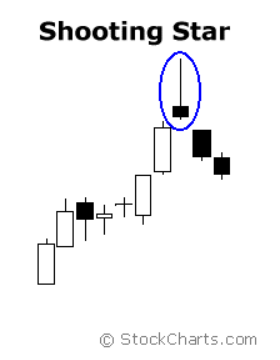
A Shooting Star is a candlestick pattern that identifies a potential trend reversal, but requires confirmation before action. It is a bearish reversal pattern that forms after an upward price trend. It occurs after the price gaps up at the open (like it did today) and then continues to move up, but then closes lower than the high of the day. I am writing this at 1pm, so it hasn’t yet closed, but I suspect this pattern is still telling. You can see what it’s supposed to look like up close in the picture above. The formation doesn’t have to be perfect or exact. A confirmation means to establish the correctness of something. Confirmation is required to validate that this pattern is a bearish reversal. The confirmation would be a gap down in price in the coming days. Until then, it is only a warning sign; a shot across the bow.

As you can see in the S&P 500 stock index price chart below, the price has been directionally trending up. It has moved about as much as it has moved in prior advances. I included the RSI indicator, which is a statistical measure that suggests the price is “overbought”. RSI is the “Relative Strength Index” that measures the speed and change of price movements. Over short time frames, like 28 days, price trends tend to exhibit mean reversion. That is, while price trends tend to continue their current trend over periods of 3- 12 months, they tend to oscillate up and down over short-term periods like a month. That is the price trend tends to peak out when the RSI reading is over 70 and bottom out when it’s closer to 30. Of course, we mainly want to follow the primary trend and looking at the chart below, that would require living with the swings of 5 -10%. If we are unwilling to deal with that, we would have to accept missing some of the gains that is required when we reduce exposure to miss some of the decline.

Image

Source: https://stockcharts.com/h-sc/ui?s=spy

I don’t necessarily make my portfolio management decisions with these patters, but instead wanted to share this observation for those interested in understanding what I see when I observe trends unfold like this one. If nothing else, I wouldn’t be surprised to see at least a minor reversal in the price in the near future. When it does that, it may only be a 5% decline and then reverse back up to new highs again. Or, it could go on to make a lower low and be the start of a bear market. You can probably see how this is a daily and dynamic process that evolves over time requiring constant adapting to new information and changes in the current state.

Some may try to tell you that the analysis or price trends don’t work. They may say that because they themselves lack expertise or experience with it, or haven’t been successful at it. But rest assured; some of the most profitable hedge funds apply directional trend systems including pattern recognition, and trend following, all of which can be called technical or statistical analysis of price trends. If they don’t know that, they simply haven’t really studied the most successful funds in history.

In my experience I have found that those who aren’t successful applying quantitative, statistical, or chart pattern methods are people who require complete perfection. They are looking for the 100% accurate switch that doesn’t exist in anything. If it doesn’t work this time, or next, they move on rather than understanding that probability is an estimation of likelihood of occurrence of an event, not a certain outcome. Determining the probabilities and expectation is, by definition, the mathematics of an edge. Those without an edge don’t get that, and that’s why they have no edge.

What in the World is Really Going on, Part 2: Kicking the Can Down the Road

Jim Rogers says it best.

Playing with Words: Education, Knowledge, Skill, Experience, and Expert

expert

The first step to understand something and to draw distinctions between them is to define the words we use. This isn’t always and easy task since many words don’t have a clear definition that everyone agrees on. In fact, I write my own definitions for many of the specialized topics I speak of and list them in the “definitions” pages of this website. I find that thinking deeply about the meaning of a word is useful. That is especially true for me, since I develop and operate quantitative decision making systems and program them to automatically generate the answer. Once I’ve done that, I can operate it across global markets and an unlimited number of securities and do it with a level of precision and consistency not found in humans. When I say “quantitative systematic decisions” that are processed by a computer algorithm, I think many people envision a computer doing everything on its own. That’s because most people don’t develop a program, they use one someone else developed. I’m writing this using Microsoft Word, but I am an operator of Word, but not a developer. It was just there. I don’t think about or understand what went on behind the scenes to create it. What you may not consider is that a human has to tell the computer program what it will do. I create the algorithm, which is a series of processes: if this input, then that output. You can probably see how that series can be a mile long if we’ve thought about possibilities everyday for a decade. To do that requires me to think very deeply about every single detail because software doesn’t know what to do until I tell it. The only way it will fail is if we leave something out and it has no way to move forward – no answer for the input. This gives me a unique advantage from the start: I have probably thought far more deeply about everything I do than those who spend every day trying to figure out what to do next because I am putting my thinking into more than just a trading plan, I’m putting it into a trading system. A computer needs very precise instructions to operate. A human with a “rules-based” plan has a lot of room for error because it doesn’t have to be so precise – they can make it up as they go and do one thing today and another tomorrow.

You can probably see where I am coming from when I do the “play with words”. In this case, we don’t need perfect definitions everyone agrees with to get the point.

What is education? Wikipedia defines education as:

Education in its general sense is a form of learning in which the knowledge, skills, and habits of a group of people are transferred from one generation to the next through teaching, training, or research. Education frequently takes place under the guidance of others, but may also be autodidactic. Any experience that has a formative effect on the way one thinks, feels, or acts may be considered educational.

What is knowledge? Wikipedia defines knowledge as:

Knowledge is a familiarity with someone or something, which can include facts, information, descriptions, or skills acquired through experience or education. It can refer to the theoretical or practical understanding of a subject. It can be implicit (as with practical skill or expertise) or explicit (as with the theoretical understanding of a subject); it can be more or less formal or systematic.[1] In philosophy, the study of knowledge is called epistemology; the philosopher Plato famously defined knowledge as “justified true belief.” However, no single agreed upon definition of knowledge exists, though there are numerous theories to explain it. Knowledge acquisition involves complex cognitive processes: perception, communication, association and reasoning; while knowledge is also said to be related to the capacity of acknowledgment in human beings.

What is skill? Wikipedia defines skill as:

A skill is the learned ability to carry out a task with pre-determined results often within a given amount of time, energy, or both. In other words the abilities that one possesses. Skills can often be divided into domain-general and domain-specific skills. For example, in the domain of work, some general skills would include time management, teamwork and leadership, self motivation and others, whereas domain-specific skills would be useful only for a certain job. Skill usually requires certain environmental stimuli and situations to assess the level of skill being shown and used.

Since we are speaking of skill, let’s also define luck: Luck or chance is an event which occurs beyond one’s control, without regard to one’s will, intention, or desired result. Luck can be good or bad. If skill is what we intentionally do and some degree of control in the outcome from our actions, luck is the part beyond our control. A good rule of thumb is: if you can’t lose on purpose, it’s luck. For example, a roulette table is luck. You can’t win or lose on purpose. Poker is skill-based games were we can apply probability and money management toward a better outcome. If you want to lose, you can.

What is experience? Wikipedia defines experience:

Experience comprises knowledge of or skill of some thing or some event gained through involvement in or exposure to that thing or event. The history of the word experience aligns it closely with the concept of experiment. For example, the word experience could be used in a statement like: “I have experience in fishing”.

The concept of experience generally refers to know-how or procedural knowledge, rather than propositional knowledge: on-the-job training rather than book-learning. Philosophers dub knowledge based on experience “empirical knowledge” or “a posteriori knowledge”.

A person with considerable experience in a specific field can gain a reputation as an expert.

What is an expert? Wikipedia defines an expert:

An expert is someone widely recognized as a reliable source of technique or skill whose faculty for judging or deciding rightly, justly, or wisely is accorded authority and status by their peers or the public in a specific well-distinguished domain. An expert, more generally, is a person with extensive knowledge or ability based on research, experience, or occupation and in a particular area of study. Experts are called in for advice on their respective subject, but they do not always agree on the particulars of a field of study. An expert can be, by virtue of credential, training, education, profession, publication or experience, believed to have special knowledge of a subject beyond that of the average person, sufficient that others may officially (and legally) rely upon the individual’s opinion. Historically, an expert was referred to as a sage (Sophos). The individual was usually a profound thinker distinguished for wisdom and sound judgment.

Experts have a prolonged or intense experience through practice and education in a particular field. In specific fields, the definition of expert is well established by consensus and therefore it is not necessary for an individual to have a professional or academic qualification for them to be accepted as an expert. In this respect, a shepherd with 50 years of experience tending flocks would be widely recognized as having complete expertise in the use and training of sheep dogs and the care of sheep. Another example from computer science is that an expert system may be taught by a human and thereafter considered an expert, often outperforming human beings at particular tasks. In law, an expert witness must be recognized by argument and authority.

Research in this area attempts to understand the relation between expert knowledge and exceptional performance in terms of cognitive structures and processes. The fundamental research endeavor is to describe what it is that experts know and how they use their knowledge to achieve performance that most people assume requires extreme or extraordinary ability. Studies have investigated the factors that enable experts to be fast and accurate

We can now draw a few distinctions here. A person with education is one who has been taught by others or learned from others. Any experience that changes the way one thinks, feels, or acts may be considered educational. You can have an education in investment, trading, and finance, but that may indicate you have gained some knowledge, but not necessarily skill or experience. Knowledge is when we actually understand something and are familiar with it. It seems one way to gain new knowledge is through education – learning from others, researching, etc. Experience comes from the word experiment, so it is knowledge of or skill of some thing gained through involvement in and exposure to that thing. We have experienced it before, or not. Experience can have a wide range of magnitude. Many investors and traders may believe looking at charts for a few hours over a few years makes them experienced. But imagine the difference if they’ve been doing it for several hours a day for two decades. The more experience we have, the more we get in the zone. Experience creates the flow zone: when we have done something so many times we don’t have to think about doing it, we just do. Like driving a car. We don’t think of putting on the brake, but a new driver does. Someone who has an excellent driving record for many years is an expert. Experts have a prolonged or intense experience through practice and education in a particular field. There are different degrees of expert. A professional race car driver is a different level of expert than a person who has just been driving to work every day for years. In racing, you have to be very good to become a professional. In the asset management industry, that isn’t necessarily the case. Investment advisers who work with individual investors often don’t show their potential clients their actual past performance history since they’ve been a professional. They can instead show potential clients performance of something that they didn’t actually invest in when it had good results or even make up past performance with hypothetical and back-tests. A race car driver can’t do that.

I point out these words and draw some distinctions because I am amazed on the magnitude of overconfidence people have when it comes to portfolio management decision-making. For example, I say that I consider an “expert” portfolio manager one who has spent all of his or her time making tactical trading decisions daily for more than a decade and has an excellent actual performance history doing it. This expert has examined well over 10,000 charts with knowledge of how markets interact and how price trends begin and end. An expert portfolio manager developed computer programs designed to define global market trends, separate them out, and enter and exit them while controlling risk systematically.  The expert has been operating those systems with discipline for more than a decade and the outcome from that is his or her good track record.

If we define it that way, then we can get an idea where we fit in regard to education, knowledge, skill, expertise, and experience.
What is “News”?

news-3

News is Information not previously known to someone. New information, newly received information, or noteworthy information, especially about recent or important events.

For example:

“I’ve got some good news for you”

“This was hardly news to her”

What in the World is Really Going on

I find that people don’t know what in the world is really going on or understand the big picture beyond what has happened most recently. They don’t really understand the aggressive Fed policies the past five years or the long-term debt cycle of the United States. If you really want to understand what is really going on in the big picture, I encourage you to watch this 30-minute video How The Economic Machine Works by Ray Dalio. After you watch it, you’ll understand how debt cycles work, how the Fed operates, and the current cycle the U.S. is in today. That is, you’ll begin to understand what in the world is going on in a way that only a few people do. It’s the kind of information and understanding you’ve previously never had access to.

And, you won’t be so surprised by what happens next…

“A stock operator…

“A stock operator has to fight a lot expensive enemies within himself”.

Reminiscences of a Stock Operator

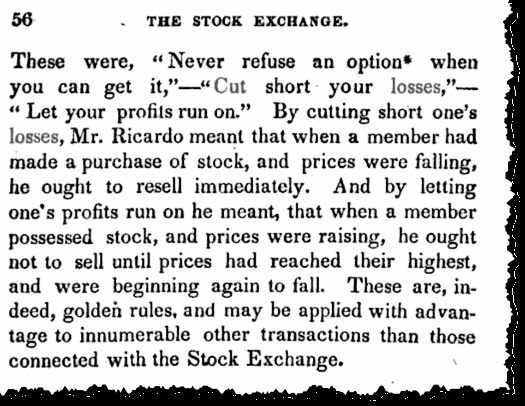
Cut short your losses, let your winners run on.

– David Ricardo 1772 – 1823

Those words, today known as “The Golden Rule of Trading”, were printed in The great metropolis, Volume 2 By James Grant in 1838. To be sure what he specifically meant:

Cut your losses short let your winners run

Source: The great metropolis, Volume 2 (Google eBook)

“Do not regret …

do not regret growing older


source: unknown.

(if you know the source, contact us).

Impossibilities in the World

Who would believe the government of world’s greatest country, the United States of America, would shut down? And, since it did today, who would expect the Dow Jones Industrial Average would be up 65 points at noon? Portfolio management requires preparation and dealing with unlikely events – those that may even seem impossible. And then, accepting the things we cannot change. With that in mind:

einsteintongue

Impossibilities in the World

No matter how smart you are…

1) You can’t count your hair.

2) You can’t wash your eyes with soap.

3) You can’t breathe when your tongue is out.


Put your tongue back in your mouth, silly!

It’s a Beautiful Morning even when it’s not…

My INVESTOR’S BUSINESS DAILY® Interview and Portfolio Management

Portfolio Management is about buying and selling many different positions over time, not just one “pick”. I often say it’s like flipping 10 coins at the same time with each having a different payoff and profit or loss. It could be a completely random process (like flipping a coin), but if we can positively skew the payoffs (asymmetric payoffs) we end up with more profit than loss (asymmetric returns). And, as a portfolio manager I may flip that coin 100 or 500 times a year. The fact is: if the expectation for profit is positive we want to do it as often as possible.

Picking just one position is like flipping the coin just once. Its outcome may have an expected probability and payoff that is positive, but will be determined by how it all unfolds. We can never control the outcome at the point of entry. It’s the exit that always determines the outcome. We can say that same whether we are speaking of stocks, bonds, commodities, and currencies or buying and selling private businesses: if you actually knew for sure the outcome would be positive you would only need to do it once – but you don’t. So deciding what to buy is a small part of my complete portfolio management process. It’s what I do after I’m in a position that makes it “management”. To manage is to direct and control. If all you do is “buy” or “invest” in a position, you have no position “management”.

But when Trang Ho at INVESTOR’S BUSINESS DAILY®recently asked me “What ‘s the one position you would choose over the next several months and why”, I gave her the first position I thought of – and the most recent position I had taken. I primarily get positioned with the current direction of the trend and stay with it until it changes. That may be labeled “trend following”. I define the direction of the trend (up, down, sideways) and then get in that direction until it changes. Trends don’t last forever. There is a point when the probability becomes higher and higher of a reversal. I call that a “counter-trend”. I developed systems that define these directional trends more than a decade ago and have operated them for-profit since. What I can tell you from my experience, expertise, and empirical evidence is that stock market trends, like many other market trends, cycle up and down over time. So, portfolio management is a daily routine of position management that includes predefining risk at the point of entry, taking profits, and knowing when to exit to keep losses small. That exit, not the entry, determines the outcome.

You may consider these things as you read my recent interview in Investors Business Daily titled: Market Strategists: 5 Contrarian ETF Investing Ideas.

Read More At Investor’s Business Daily: http://news.investors.com/investing-etfs/090613-670234-contrarian-etf-investing-ideas-stock-market-strategists.htm#ixzz2gNp8bWUT

Asymmetric Payoff: The Price of College Sports

Schooled- The Price of College Sports

Not all asymmetric payoffs are fair. As the college football season gets into full speed, college sports gets some unwanted publicity. It was sickening to hear Arian Foster say:

“I called my coach and I said, ‘Coach, we don’t have no food. We don’t have no money. We’re hungry. Either you give us some food, or I’m gonna go do something stupid.’ He came down and he brought like 50 tacos for like four or five of us. Which is an NCAA violation. [laughs] But then, I walk up to the facility and I see my coach pull up in a brand new Lexus.” — Arian Foster

It’s sickening not so much because the coach broke the rules by feeding a player, but instead that someone who works as hard as a student athlete is sitting there hungry in the United States of America. And, while the college sports “industry” earns billions of dollars in profits. You surely don’t have to be a hardcore Libertarian to see the problem with that. It’s no surprise that many college athletes don’t have financial support from their family. It’s time for universities to focus on how to at least be sure student athletes have food and decent living conditions. I think they earn it.


The conversation will get started when the documentary Schooled: The Price of College Sports premieres Wednesday October 16th 8PM on EPIX:

“The EPIX Original Documentary Schooled: The Price of College Sports is a comprehensive look at the business, history and culture of big-time college football and basketball in America. It is an adaptation of “The Cartel” by Pulitzer Prize Winning civil rights scholar Taylor Branch, and his October 2011 article in The Atlantic, “The Shame of College Sports.” Schooled presents a hard-hitting examination of the NCAA’s treatment of its athletes and amateurism in collegiate athletics; weaving interviews, archival and verité footage to tell a story of how college sports became a billion dollar industry built on the backs of athletes who are deprived of numerous rights.”

Read more: Schooled: The Price of College Sports

Game Changing Asymmetry

ORACLE Team USA

Source: ORACLE® Team USA

If things actually worked they way we are taught in school, all you need to do it get a “college degree” and you’ll be successful.

The reality is, learning the essentials like reading, writing, and arithmetic are basic requirements like eating, sleeping, and you know what.

To be great at something, we have to do a lot more than the basics.

You may consider that many of the greatest game-changers in America didn’t need anyone to tell them what to do next. They instead charted their own course and it was one that didn’t exist before.

Our society wants us to fit into the middle of the bell curve like the average person, but for some of us it’s a lot more fun to be an outlier,

Congratulations! To Larry Ellison and his ORACLE® Team USA for completing an improbable comeback to win Race 19 to successfully defend the 34th America’s Cup on Wednesday in San Francisco.

It’s a fine example of a game-changing asymmetry.

Before the huge win, Larry Ellison, who is co-founder and CEO of ORACLE®, was criticized for skipping a keynote address at a company conference to instead watch the comeback of his regatta team. It was a once in a lifetime moment only a few will ever experience by a man who has earned his freedom.

It’s a fine example of knowing when to get off the treadmill…

And, if you know the story, this unlikely outcome came from an unlikely team to start with. The combination of a billionaire CEO and a car radiator mechanic. The story is in The Billionaire and the Mechanic by Julian Guthrie. (I’ve been listening to the Audible version). It’s about how an unlikely duo won the sport’s oldest trophy – before this one. From Amazon:

“The America’s Cup, first awarded in 1851, is the oldest trophy in international sports, and one of the most hotly contested. In 2000, Larry Ellison, co-founder and billionaire CEO of Oracle Corporation, decided to run for the coveted prize and found an unlikely partner in Norbert Bajurin, a car radiator mechanic who had recently been named Commodore of the blue collar Golden Gate Yacht Club.

Julian Guthrie’s The Billionaire and the Mechanic tells the incredible story of the partnership between Larry and Norbert, their unsuccessful runs for the Cup in 2003 and 2007, and their victory in 2010. With unparalleled access to Ellison and his team, Guthrie takes readers inside the design and building process of these astonishing boats, and the management of the passionate athletes who race them. She traces the bitter rivalries between Oracle and their competitors, including Swiss billionaire Ernesto Bertarelli’s Team Alinghi, and throws readers into exhilarating races from Australia and New Zealand to Valencia, Spain.

With new television coverage and huge media, the America’s Cup is poised to be bigger than ever, and The Billionaire and the Mechanic is a must-read for anyone interested in the race or this remarkable story.”

Do you choose the blue pill or the red pill?

Red-Pill-Blue-Pill

The “red pill” and “blue pill” refer to a choice between the willingness to learn a potentially unsettling or life-changing truth by taking the red pill or remaining in contented ignorance with the blue pill. It refers to a scene in the 1999 film The Matrix.

I have been talking to a financial planner recently who is struggling between the red pill and the blue pill.

On the one hand, the poor performance of stock and bond indexes over the past decade or so, particularly the losses in bear markets, led him to study long-term market cycles.

An understanding that markets don’t always go up over long periods is the reality of the red pill.

On the other hand, much of the investment industry still believes in getting “market returns” and that a simple plan of “asset allocation” and occasional re-balancing is prudent enough, so a financial planner can choose to keep his practice simple by continuing that plan.

Some investment advisers even consider re-balancing and an occasional change “tactical”.

It isn’t.

The blue pill and the red pill are opposites, representing the choice between the blissful ignorance of illusion (blue) and embracing the painful truth of reality (red).

On the one hand, after understanding the trends of global markets based on simply looking at their history, he realizes the probable outcome of stocks and bonds based on trends I discuss in The S&P 500 Stock Index at Inflection Points and 133 Years of Long Term Interest Rates. Though price trends can continue far more than you expect, the stock and bond markets are at a point where their trends could reverse. The financial planner realizes if he takes the red pill of reality, he’ll have to embrace these facts and do something rather than sit there. He’ll have to change his long-held beliefs that markets are efficient and the best you can do is allocate to them. He’ll have to do extra assignments and homework to find alternative investment managers whose track record suggests they may have the experience and expertise to operate through challenging market conditions.

On the other hand, changing one’s beliefs and taking a different approach can be extra work and have risks. If he continues the static asset allocation to stocks and bonds he’s always done, he says he won’t be doing something so different from the majority of advisers. He knows his career and his life will be easier. When the markets go up, his clients make market returns (minus his fees). When the markets go down, other people are losing money too, and he certainly can’t control what the market does, so: it’s the market. I can see how this is an enticing business model, especially for a busy person who has a life outside the office. That’s probably why it’s so popular.

A similar theme of duality happens in the movie The Matrix.

Morpheus offers Neo either a blue pill (to forget about The Matrix and continue to live in the world of illusion) or a red pill (to enter the sometimes painful world of reality).

Duality is something consisting of two parts: a thing that has two states that may be complementary or opposed to each other. We all get to choose what we believe and our choices shape the world we individually live in.

I can’t say that I can totally relate to the financial adviser because it is my nature to be more tactical and active in decision-making. I believe we should actively pursue what we want. And, I believe what we want from the markets is in there, I just have to extract it from the parts we don’t want. I once explained my investment strategy to a lifelong friend and he replied “you have always been tactical” and reminded me of my background. Though it’s different from me, I can truly appreciate the struggle advisers and investors face choosing between the red or blue pill. Investors and advisers like “market returns” when they are positive, which is what we experience most of the time. It’s when those markets decline that they don’t want what the market dishes out. The markets don’t spend as much time in declines. I pointed out in The Real Length of the Average Bull Market the average upward trend for stocks (bull market) lasts 39 months while the average decline ( bear market) is about 17 months. Investors eventually forget and become complacent about the time they need a reminder. Though the stock markets trend up about 3 times longer than they trend down, it’s the magnitude of the losses that cause long-term investors a problem. For example, the bull market from 2003 through October 2007 gained over 105% but the -56% decline afterward wiped out those gains. You can see that picture in The S&P 500 Stock Index at Inflection Points.

The risk for the financial adviser who has historically focused on “market returns” is that a new strategy for them that applies some type of active risk management is likely to be uncorrelated and maybe even disconnected at times from “market returns”. For example, I discussed that in Understanding Hedge Fund Index Performance. Investors who are used to “market returns” but need a more absolute return strategy with risk management may require behavior modification. If they want an investment program that compounds capital positively by avoiding large losses and capturing some gains along the way they have to be able to stick with it. That requires the adviser to spend more time educating his or her investors about the reality of the red pill. Kind of like I am doing now. Some people have more difficulty doing something different, so they need more help. Others are better able to see the big picture. Some financial advisers would rather deal with explaining the losses when markets decline. For them, it can be as simple as forwarding clients some articles about the market going down with a message something like “We’re all in this together – let’s just hunker down”. That doesn’t require a great deal of independent thinking or doing.

While most individual investors probably do lose money when the stock and bond markets do, that isn’t necessarily the case for those who direct and control downside risk.

It isn’t enough to have a good investment program with a strong performance history.

Just as important is the ability to help investors modify their beliefs and behavior.

That’s the reality of the red pill.

By definition, active is more work than passive. Investors and advisers alike get to choose which pill they take: the blissful ignorance of illusion (blue) and embracing the painful truth of reality (red).

I believe in individual liberty and personal responsibility, so the choice is your own.

My thoughts on the subject are directional – I am the red pill.

Morpheus: “You have to understand, most of these people are not ready to be unplugged. And many of them are so inured, so hopelessly dependent on the system, that they will fight to protect it.”

“Unfortunately, no one can be told what the Matrix is.

You have to see it for yourself.”

Like The Matrix, this is going to be a sequel.

To be continued…

The Dow Jones Industrial Average is a Black Box

The black box:

In science and engineering, a black box is a device, system or object which can be viewed in terms of its input and output but without any knowledge of its internal workings. Its implementation is “opaque” (black). Almost anything might be referred to as a black box: a transistor, an algorithm, or the human brain.

Blackbox.svg

The opposite of a black box is a system where the inner components or logic are available for inspection, which is sometimes known as a clear box, a glass box, or a white box.

Almost all investment programs are actually a black box. That is, the investment manager may allow the investor to see the holdings, but most investment strategies have many parts and parameters that are undisclosed to the public or even its investors. There is strong logic behind not disclosing ones intellectual property beyond the obvious. And, it isn’t just about intellectual property, it may be a fiduciary issue, too. When the public knows what a portfolio manager is going to do in advance, other portfolio managers can front-run the trade. Just ask Russell whose indexes are more transparent and we believe they’ve had issues because of it. I think a portfolio manager has an obligation to avoid that. And,  it just makes sense.

We can say the same for stock indexes like the Dow Jones Industrial Average or other Standard & Poors indexes. By now, it is public knowledge that the committee that oversees the Dow Jones Industrial Average has made 6 significant changes to the 30 stocks that make up the index. The Index Committee dropped Alcoa, Hewlett-Packard, and Bank of America, and added Goldman Sachs, Nike and Visa. Did you know in advance they would do that? We didn’t know until after they announced it. Why? because it’s something a committee decided. As we defined above, what is going on in the human brain is a black box. When people are going to make decisions, we can’t determine for sure in advance what the output will be.

Though we can’t actually invest in an index directly, index investors and traders gain exposure to indexes through index funds like exchange traded funds (ETFs). We say that ETFs allow us to gain exposure to a market, sector, country, etc. in a low-cost, transparent, and efficient format. But, the transparency is in regard to the index holdings and maybe the universe they select from, but not necessarily how they decide to add and delete holdings (causing the index ETF we may own to buy and sell the underlying stocks, bonds, etc.).

Is that process a black box? Yes, it is.

We know only parts of the input, we know the output, but we don’t actually know in advance the inner workings of the decision. An index like the Dow Jones Industrial Average is a system that can be understood in terms of its input and output, but not necessarily any knowledge of its internal workings. In the recent case of the Dow Jones Industrial Average, the changes will take effect with the close of trading on Sept. 20th. According to the Wall Street Journal, it was explained in a statement:

“we were prompted by the low stock price of the three companies slated for removal and the Index Committee’s desire to diversify the sector and industry group representation of the index,” S&P Dow Jones Indices LLC, the company that oversees the Dow”

Only the “low price” part of that is rules-based. The Index Committee made the decisions to reflect their desire. That doesn’t seem different from an “Investment” Committee that makes such decisions for a fund or other investment program. It isn’t.

What do you really know about indexes? We know the Dow is a price-weighted index, meaning the bigger the stock price, the larger the position for the stock, and vice versa. That is different from indexes such as the Standard & Poor’s 500, which are weighted by components’ market capitalization. But, we don’t know enough about how the Index Committee makes its decisions to have known in advance what stocks they will change. If we did know that, we could buy the new stocks and sell the outgoing stocks in advance of their announcement. That’s one reason they don’t publish it. However, the black box index goes beyond that. They couldn’t publish it before they decide the changes – they didn’t know either what the output would be until the committee members gave their input. Though many indexes may appear more quantitative (systematic decisions based on predefined rules) they are just as qualitative based on judgement and opinion (an Index Committee makes the decisions, so you don’t actually know what they’ll decide – it isn’t so “rules-based”). My point is: we couldn’t have known the outcome in advance because there was an internal meeting involved to decide.

But an index fund investor doesn’t really need to know this information in advance. Neither does an investor in any investment program. That’s why they are an “investor”. If they are a “portfolio manager” or “trader” they can do it themselves and make their own decisions deciding every little detail. When we choose to invest in any fund, index or not, we necessarily leave part of the process to the deemed expert. In the case of the index, the expert is the index provider like S&P Dow Jones Indices.

The Dow Jones Industrial Average index is totally transparent in regard to its holdings, but a black box in regard to how the additions and deletions are decided.

Stay tuned: I’ll get into this more next week…

Enter your email address to subscribe to this blog and receive notifications of new posts by email.

To learn more about the Dow Jones Industrial Average, visit its learning center which shows the Ins & Outs of the Dow since 1896 and read Dow Jones Industrial Average Historical Components.

Understanding Hedge Fund Index Performance

I am often fascinated by investor perception and behavior. I notice it everywhere and study it always. What a person believes makes their world what it is and how they see things. It can also explain their own poor results. You see, if the majority of individual investors and professional investors actually have poor performance over long periods (as evidenced by Dalbar and SPIVA®)  they necessarily must be doing and believing the wrong things.

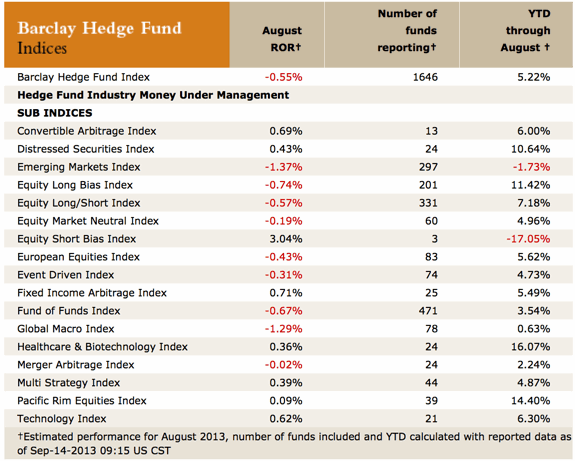
I just came across something that said “Why are hedge fund indexes performing so poorly?”. My first thought was “Are they?”. There are a few different hedge fund indexes, but I use the Barclay Hedge Fund Indices because it can include more than 1,000 funds each month across a wide range of strategies.

The Barclay Hedge Fund Index is a measure of the average return of all hedge funds (excepting Funds of Funds) in the Barclay database. The index is simply the arithmetic average of the net returns of all the funds that have reported that month.

As you can see below, the Barclay Hedge Fund Index, which is the average return of all hedge funds in the Barclay database, has gained 5.22% year to date through August. Is 5.22% a “poor” return when the risk free rate on short-term T-Bills, money markets, and CD’s are near zero? I don’t think so. But, if you compare it to the highest returning index you can find maybe you’ll perceive it as “poor”. For example, the stock market indexes are so far “up” double digits this year, but they can reverse back down and end the year in the red. Stock indexes are long-only exposure to stocks so their results reflect a risk premium earned for owning stocks with no risk management to limit the downside. I don’t know anyone who thinks the stock indexes have created the kind of risk adjusted return they want after declining more than -50% twice the past several years. If they want to compare “hedge funds” to a long-only stock index they should consider focusing on hedge funds that focus on stocks.

As you can see below, the hedge fund index includes a wide range of alpha strategies. The Equity Short Bias is one of only two that are down year to date and that is expected: they are short stocks and stocks have gained this year, so these strategist that short stocks  have lost money. Emerging Markets is the other that is down, which is not terribly surprising since most emerging markets are down. They have still managed risk: through August the Emerging Markets Hedge Fund Index is down -1.73% while the iShares MSCI Emerging Markets ETF is down -13.17%. I’m sure any of those hedge fund managers who are down don’t think that’s “good”, but its just a short period of time.

Barclay Hedge Fund Indices

Source: http://www.barclayhedge.com/

Investment managers are to compare their performance to something to illustrate the general market and economic conditions over a period. Since my investment programs don’t intend to benchmark any indexes, we often use the Barclay Hedge Fund Index as a comparison of this “alpha index” to our programs.

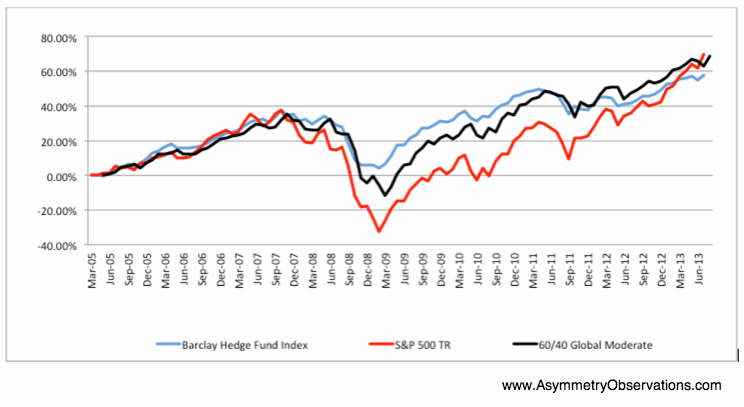
In the chart below, we have compared over a full market cycle the Barclay Hedge Fund Index, Dow Jones Global Moderate (a monthly rebalanced index of an allocation across 14 global indexes that are 60% global stocks, 40% global bonds), and the S&P 500 stock index The blue line is the Barclay Hedge Fund Index. Keep in mind that the hedge fund index is net of hedge fund fees while the S&P 500 stock index and Dow Jones Global Moderate does not reflect any fees.  If an investor used an adviser, they would pay a management fee, index fund fees, and trading cost, so the net return would be less. Recently, it has “lagged” the other two, but over the full cycle, its risk/reward profile is significantly superior. Though they all ended with about the same total return, the Barclay Hedge Fund Index declined -24% peak to trough during the 2007 – 2009 bear market. That -24% is compared to -38% for the Dow Jones Global Balanced 60/40 index and -55% for the S&P 500 total return (including dividends). That is the advantage of “active risk management” many hedge funds attempt to apply. Look closely at the chart below and decide which experience you would have rather had. And then, consider that it’s important to view the full picture over a full market cycle rather than focus on short-term periods.

Hedge Funds vs. Asset Allocation and Stock index

As to why the Barclay Hedge Fund Index has lagged stocks lately?

They are supposed to. Hedge funds as a group, as measured by a composite index, are investing and trading long and short multiple strategies across multiple markets: bonds, stocks, currency, commodities, and alternatives like volatility, real estate, etc.

You may also consider that hedge funds are generally risk managers (though not all have that objective). If you look at the end of the last bull market in stocks (late 2007) the hedge fund index lagged 100% stock indexes then, too. You may consider that risk managers are actively managing risk and they could be right in doing it now considering the stage in the cycle.  It’s probabilistic, never a sure thing. It worked the last time. Some hedge fund strategies begin to reduce their exposure to high risk markets like stocks after they have moved up to avoid even the early stage of the decline. By doing that, they “miss out” on both the final gains but also the initial decline after a peak. Others wait until stocks actually reverse their trend, which means they’ll participate in some of the initial decline when it happens.

You may also consider that people bragging about the gains to long-only stock indexes that have no downside protection may be another sentiment indicator. Historically, it seems that about they time they get to bragging and become complacent the trend turns against them…

Note: you cannot invest directly in any of these indexes.

The REAL Length of the Average Bull Market

How long is the average bull market and bear market?

With the current bull market in stocks at its 54th month, I’ve been hearing several different statistics thrown around lately about the “average” length of historical bear markets. To calculate how long the average uptrend lasts, we have to decide what index represents that stock market and use its most relevant data.

I was telling someone recently what I believe is the correct method to calculate the average bull market cycle. The average bull market lasts about 39 months.

Someone had used the S&P 500 data from Shiller’s database which goes back to 1871 to conclude the average bull market is 50 months. I note two issues with the way they calculated their average.

While that data can be useful for some purposes, we have to understand how the data was compiled and its details. For example, the S&P 500 has been widely regarded as the best gauge of the large cap U.S. equities market, but it was first published in 1957. You may wonder how the Shiller data goes back another 86 years before the index was first published. Other indexes were used and the short story is those indexes used far fewer than 500 stocks, were focused on a few industries, and monthly data wasn’t always available. For example, in Standard Statistics Co. is the predecessor of today’s Standard & Poor’s Corp. In 1926 they developed a 90-stock index that by the 1950s had evolved into the S&P 500. Many people speak of these indexes, but it seems few actually know much about them. You may consider if that index prior to 1957 data is actually relevant enough to understand modern bull and bear markets. If you want, you can visit the data website to fully understand how it was created.

Second, like many others do, they defined bear markets as a 20% decline from a prior peak lasting at least 3 months. They defined bull markets as an advance of 50% or more from the low of a bear market over 6 months or longer. From those definitions and parameters, they conclude the average bull market is 50 months.

I develop and operate quantitative portfolio management systems that I apply to price data to identify potentially profitable price trends and manage risk. In other words, I prefer to have exposure to rising trends and avoid (or short) falling trends. I can tell you from my expertise that one great thing about my process is that it required me to precisely define every single detail. The data, definitions, and parameters that create the decision-making algorithm – which is the process that tells me what to do next. That may give you some idea of how I observe things like this.

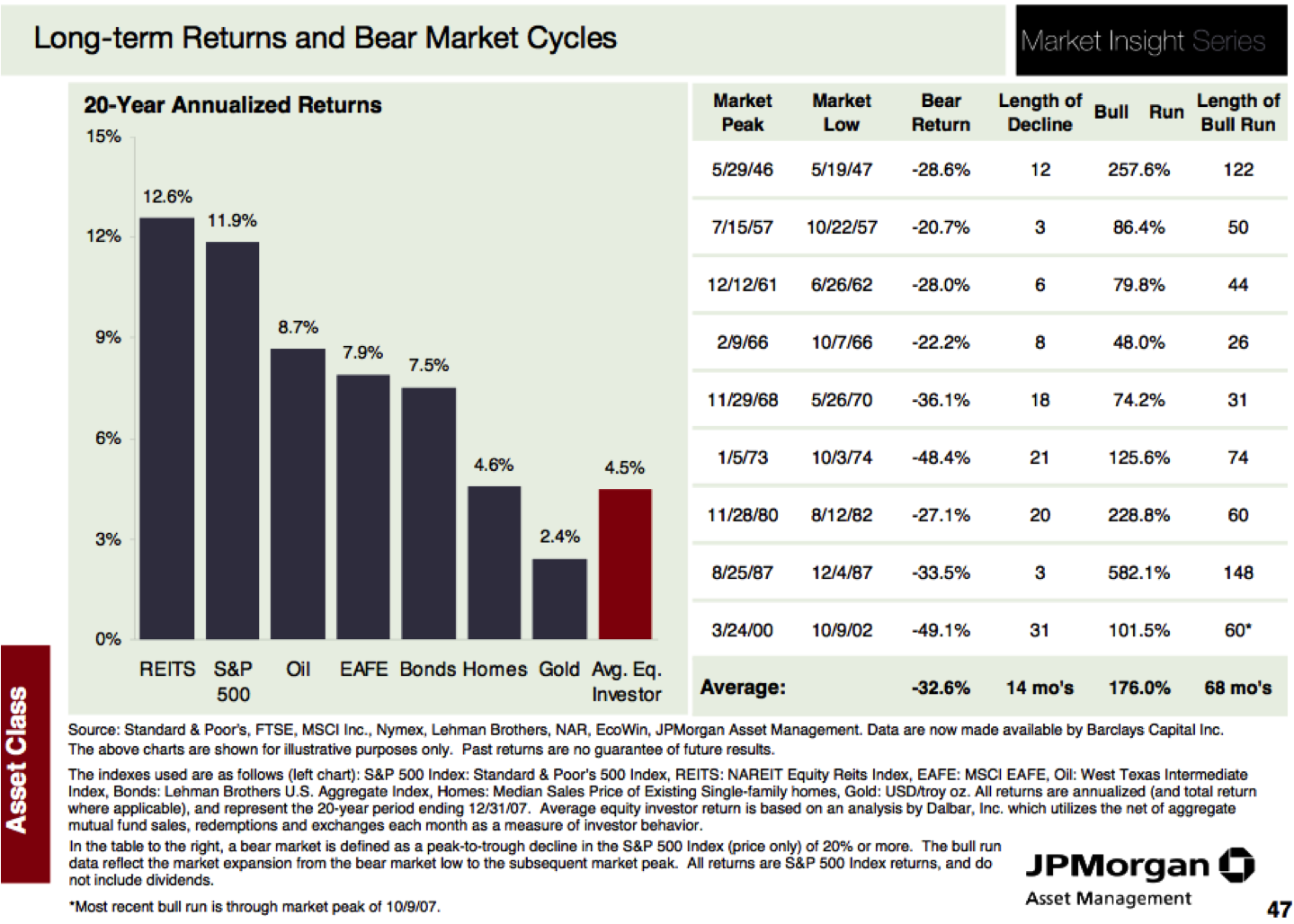
I found a similar study by JP Morgan that states the average bull market is a whopping 68 months long going back to 1946. The fine print at the bottom of the chart states they defined a bear market as “a peak-to-trough decline in the S&P 500 Index (price only) of 20% or more. The bull run data reflect the market expansion from the bear market low to the subsequent market peak.” That explains why their bull markets appear so long.

JPM average bull

Source: JP Morgan

While defining bull and bear markets with percentages is popular, it seems to leave out the reality of bull and bear market cycles: a full market cycle. A full market cycle includes both a bull and a bear market period, together. These cycles last about 56 months and some believe it is tied to the business cycle and others believe it may be more connected to politics. A data-driven researcher doesn’t need theory to explain what causes it – it is what it is.

I believe the table below from Ron Griess more accurately represents the average bull market by considering the full market cycle rather than defining them by percentages. The time frame is in weeks, so it shows the average bull market cycle is 155 weeks or about 39 months. The average bear market is about 17 months, which actually matches the most recent bear market from October 2007 to March 2009 (17 months). A full market cycle is 56 months.

Average Length of Bull and Bear Markets

source: www.thechartstore.com

Whatever we believe is always true for us. Whether you believe the average bull market lasts 39 months, 50 months, or 68 months, it seems the current one is likely late in its stage at 54 months as of September 2013.

As the bull market is aging learn about a strategy designed for it visit  www.Shell-Capital.com

Our beliefs create our world

“You experience what you believe unless you believe you won’t, in which case you don’t, which means you did.”

– Harry Palmer

Volatility Index VIX Shows Implied Volatility is Lower In September

Although September is often the worst month of the entire year for the stock market, so far, August was worse. And, The term structure for VIX shows that implied (or expected) volatility was actually higher in August than September. We’ll see how it all unfolds…

VIX-VXN1

Source: http://www.cboeoptionshub.com/wp-content/uploads/2013/09/VIX-VXN1.jpg

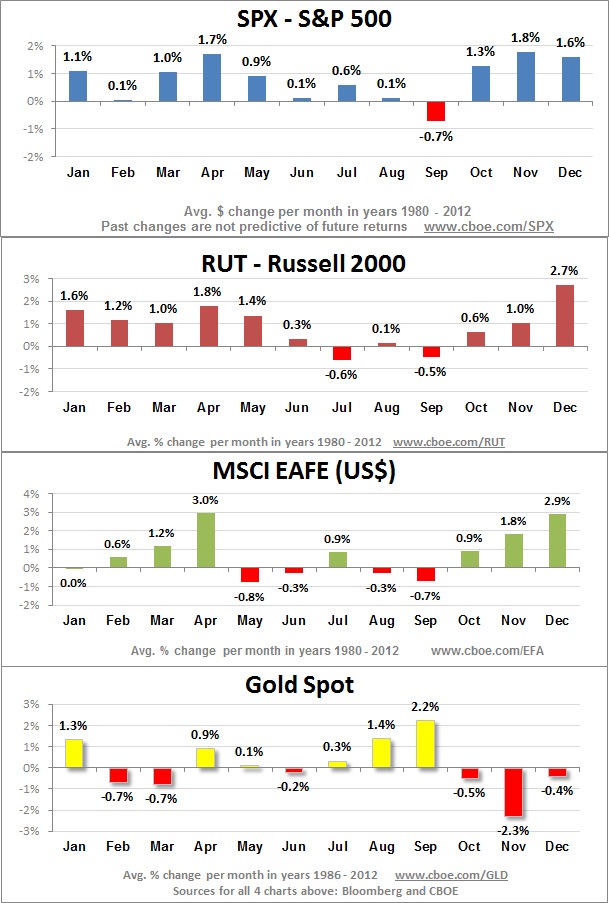
Using September to Understand Probability and Expectation.

probabilty coin flip

From 1928-2012 the S&P 500 was up 39 months and down 46 months. It’s down 55% of the time in September…

Dow Jones Industrial Average 1886-2004 (116 years) 49 years the Dow was down, in 67 years the Dow was up. It’s down 58% of the time in September…

Those are probability statements. First, let’s define probability.

Probability is likelihood. It is a measure or estimation of how likely it is that something will happen or that a statement is true. Probabilities are given a value between 0 (0% chance or will not happen) and 1 (100% chance or will happen). The higher the degree of probability, the more likely the event is to happen, or, in a longer series of samples, the greater the number of times such event is expected to happen.

But that says nothing about how to calculate probability and apply it. One thing to realize about probability it that is the math for dealing with uncertainty. When we don’t know an outcome, it is uncertain. It is probabilistic, not a sure thing.

As I see it, there are two ways to calculate probability: subjective and objective.

Subjective Probability: assigns a likelihood based on opinions and confidence (degree of belief) in those opinions. It may include “expert” knowledge as well as experimental data. For example, the majority of the research and news is based on “expert opinion”. They may state their belief and then assign a probability: “I believe the stock market has a X% chance of going down.” They may go on to add a good sounding story to support their hypothesis. You can probably see how that is subjective.

Objective Probability: assigns a likelihood based on numbers. Objective probability is data-driven. The popular method is frequentist probability: the probability of a random event means the relative frequency of occurrence of an experiment’s outcome when the experiment is repeated. This method believes probability is the relative frequency of outcomes over the long run. We can think of it as the tendency of the outcome. For example, if you flip a fair coin, its probability of landing on head is 50% and tail is 50%. If you flip it 10 times, it could land on head 7 and tail 3. That outcome implies 70%/30%. To prove the coin is “fair” (balanced on both sides), we would need to flip it more times. If we flip it 30 times or more it is likely to get closer and closer to 50%/50%. The more frequency, the closer it gets to its probability. You can probably see why I say this is more objective: it’s based on historical data.

If you are a math person and logical thinker, you probably get this. I have a hunch many people don’t like math, so they’d rather hear a good story. Rather than checking the stats on a game, they’d rather hear some guru opinion about who will win.

Which has more predictive power? An expert opinion or the fact that historically the month of September has been down more often than it’s up? Predictive ability needs to be quantified by math to determine if it exists and opinions are often far too subjective to do that. We can do the math based on historical data and determine if it is probable, or not.

As I said in September is statistically the worst month for the stock market the data shows it is indeed statistically significant and does indeed have predictive ability, but not necessarily enough to act on it. Instead, I suggest it be used to set expectations: the month of September has historically been the worst performance month for the stock indexes. So, we shouldn’t be surprised if it ends in the red. It’s that simple.

Theory-driven researchers want a cause and effect story to go with their beliefs. If they can’t figure out a good reason behind the phenomenon, they may reject it even though the data is what it is. One person commented to me that he didn’t believe the September data has predictive value. But, it does.

I previously stated a few different probabilities about September: what percentage of time the month is down. In September is statistically the worst month for the stock market I didn’t mention the percent of time the month is negative, only that on average it’s down X% since Y. It occurred to me that most people don’t seem to understand probably and more importantly, the more complete equation of expectation.

Expectation

There are many different ways to define expectation. We probably think of it as “what we expect to happen”. In many ways, it’s best not to have expectations about the future. Our expectations may not play out as we’d hoped. If you base your investment decisions on opinion and expectations don’t pan out, you may stick with your opinion anyway and eventually lose money. The expectation I’m talking about is the kind I apply: mathematical expectation.

We have determined above the probability of September based on how many months it’s down or up. However, probability alone isn’t enough information to make a logical decision. First of all, going back to 1950 using the S&P 500 stock index, the month of September is down about 53% of the time and ends the month positive about 47% of the time. That alone isn’t a huge difference, but what makes it more significant is the expectation. When it’s down 53% of the time, it’s down -3.8% and when it’s up 47% of the time it’s up an average of 3.3%. That results in an expected value of -0.50% for the month of September. If we go back further to 1928, which includes the Great Depression, it’s about  -1.12%.

The bottom line is the data says “based on historical data, September has been the worst month for the stock market”. We could then say “it can be expected to be”. But as I said before, it may not be! And, another point I have made is the use of multiple time frames for looking at the data, which is a reminder that by intention: probability is not exact. It can’t be, isn’t supposed to be, and doesn’t need to be. Probability and expectation are the maths of uncertainty. We don’t know in advance many outcomes in life, but we can estimate them mathematically and that provides a sound logic for believing.

We’ve made a whole lot of the month of September, but I think it made for a good opportunity to explain probability and expectation that are the essence of portfolio management. It doesn’t matter so much how often you are right or wrong, but instead the magnitude. Asymmetric returns are created by more profit, less loss. And that provides us a mathematical basis for believing a method works, or not. Not knowing the future; it’s the best we have.

Enter your email address to subscribe to this blog and receive notifications of new posts by email.

Connect on Linkedin and Follow me on Twitter by clicking the buttons on the right.

Momentum as a stand alone investment strategy

One observation I regularly share is the constant flow of research papers and books about topics I am interested in. Specifically, these topics are listed on the “About” page, but they are primarily those with the potential to create positive asymmetry in the P/L (that is: more profit than loss). The “momentum” subject is a big one for me, since I have operated directional trend systems for more than a decade. Momentum is sometimes called relative strength, or inertia, or trend-following. There are now more than 300 papers I know of documenting evidenced of momentum: whatever trend has been within the last year tends to continue. It’s interesting reading these research papers. They are sometimes written by academics at a University and sometimes by research at an investment company. The funny thing is they are rarely written by an investment manager who has strong performance history actually doing what they write about. I wouldn’t dare write a paper specifically about what I do that works. Nevertheless, these researchers share their opinions and only a few of us know how correct or wrong they may be.  You see, a research paper is just a study or opinion, we can never really prove something true since it can some day be proven untrue. Think: swans are white, until you see a black one. As I see it, the only people qualified to say so is if they themselves have good actual performance history doing these things. Experience matters, but research isn’t so much about experience as it is thinking deeply about a subject and offering ones views and findings.

I just got in my inbox a new paper by Ryan Larson Hot Potato: Momentum As An Investment Strategy (August 2013).

He concludes:

So what are investors to do with momentum? Our conclusion is that momentum is inadvisable as a stand-alone strategy due to the risk of precipitous losses. Rather, we suggest that long-term investors seeking to tap more than one source of equity premium choose another, more stable factor for their core investment strategy (value is certainly a strong candidate), and consider adding momentum as a short-term trading strategy when market conditions are favorable.

I agree that momentum (or relative strength) by isn’t best used as a stand alone strategy, but adding some other strategy like “value” to it isn’t the answer. Momentum (or relative strength) needs active risk management.

September is statistically the worst month for the stock market

September is statistically the worst month of the year for the stock market.

Going back to 1928, the S&P 500 has lost -1.12% on average in September. There seems to be plenty of news that could “cause” a decline in stocks this month. On top of the conflict in Syria, the Federal Reserve may taper its bond buying when it meets on the 17th and congress will soon be back to work and deal with the debt ceiling.

There are plenty of things to worry about if that’s what you like to do. I believe people often worry about things that never even happen, so they experience those things either way. I guess I am too focused on what is actually happening in this moment, now, to worry about things that haven’t even happened. And for portfolio management I always know what I’m going to do next, so I’m never trying to figure out what’s going to happen next and what to do next. I’ve been running my systems for a decade.

I noted earlier that Investor Sentiment is Bearish and that Fear is the Current Return Driver for stocks. That fear increased during August as stocks declined. It could be that investors have already anticipated the news? Keep in mind that “news” means “new information”, so none of these things are “news” today. We’ll see how it all unfolds. I believe it’s the uncertainty and change that makes life fun. I enjoy letting things evolve as they will. I know what I can control – and what I can’t.

I don’t worry about the news. I already know in advance at what point I’ll exit or hedge to control my risk or go short if markets decline.

The four charts below show a graphical image showing September as the worst month historically, though it only goes back 23 years from 1980 through 2012. It’s been the best month for gold, so maybe those holding losing gold positions will get some relief. We don’t make our investment decisions based on what month it is, but this does provide probabilities.

111Month-by-month-SPX-RUT-EAFE-Gold

Stocks and Bonds in a Short Term Downtrend

The broad global market indexes declined during August. Global stocks, represented by $SPX, EFA, and EEM below, declined -4% or more during the month. The broad bond index (AGG) declined too.

Global Market Returns August 2013

EFA: iShares MSCI EAFE is exposure to Developed markets stocks in Europe, Australia, Asia & the Far East.

EEM: iShares MSCI Emerging Markets is exposure to Emerging markets large- and mid-cap stocks.

AGG: iShares Core Total U.S. Bond Market is exposure to  US investment grade bonds

$SPX S&P 500® is widely regarded as the best single gauge of large cap U.S. equities.

Asymmetry in Unemployment

There is a clear correlation between the level of education and unemployment. College graduates is 3.8% while those with less than a high school degree is 11.1%!

Asymmetry in Unemployment

133 Years of Long Term Interest Rates

Another incredible observation of long term interest rates comes from Shiller’s database.  The red line is the trend in long term interest rates. Interest rates peaked in 1981. That would have been an incredible time to buy bonds: their yields were 15%. But it was a terrible time to borrow money. Then interest rates declined dramatically- until now. Interest rates have been 2-3% lately, the lowest going back to 1880. At low interest rates, it’s a great time to borrow money, but a very risky time to buy bonds. When interest rates eventually go up, their values will go down. With rates at outlier low rates and the Fed going to need to taper their Quantitative Easing they’ve created to prop up the economy and stock market, the rise in rates in the years ahead could possibly be stunning. So the decline in bond values would be equally stunning. One of my advantages as a global macro manager is an understanding of how world markets interact with each other. The inverse relationship between bond price and interest rates is one of the few inter-market relationships that is a sure thing.

Long Term Interest Rates

Source: Shiller’s database.

For more views on bonds, read Interest Rates Trend and  Interest Rates are Trending Up, Bonds Investors Feeling the Pain


“Computers are …

Asymmetric Trading Systems

“Computers are useless. They can only give you answers.”

Pablo Picasso

Asymmetry Observation: Global Markets Diverge Since May

Since May, we observe that global market indexes have diverged. While some markets are still trending up, others are trending down. Prior to 2013, many markets were generally trending together. The current U.S stock bull market is now 52 months old from from its March 2009 bear market low. If history is a guide, it’s closer to the end (read: The S&P 500 Stock Index at Inflection Points). One of the things we see near the end of a major trend change is some world markets start to reverse down. For example, going in to 2008 it was Financials and REITs (real estate). As we see in the chart, U.S. stocks are still trending up for now, but emerging markets and all categories of bonds and Real Estate Investment Trusts (REITs) are weak. Rising interest rates = falling bond prices and falling interest rate sensitive markets like REITs. The diversification of global asset allocation over this period has actually resulted in more downside risk rather than reducing it. Bonds have been in a rising trend for the past 30 years, so when stocks drop -50% exposure to bonds haves helped to offset the losses for asset allocators who mix stocks and bonds. If bonds are changing to a downtrend as it appears they are, bonds may not be a crutch in the next bear market. In fact, they may inflate losses.

Image

If you aren’t familiar with the index symbols for the markets in the table in the top left:

If you have any questions or comments, contact me.

Earning Your Freedom

Mike Shell on boat

Photo by Christi Shell

As I sit here this morning in my favorite place watching ESPN College Game Day getting ready to spend the Labor Day weekend on the lake, I was thinking…

Over the years, I’ve asked many people what is most important to them. What I’ve learned is that while we all have different ways we like to spend our time, at the end of the day what we really want is freedom. That is, freedom to do what we want, when we want.

I want to share with you my beliefs about freedom and how to earn it.

An employee is hired to operate a system that another created. Their job is to operate the system; maybe it’s an engineer working for a large engineering firm or a physician working for a large medical practice. For that, the employee enjoys having a system they operate, but that they don’t have to create or necessarily keep updated. They enjoy the job stability.

The self-employed person is one who believes they can do it better, so they start their own firm or medical practice and create their own systems to manage the business. But, the self-employed person also operates the system. They are there, running the system they created. And they have to be there, or there is no system.

As they shift more toward freedom, they can become a business owner. The business owner hires all the necessary people to completely run the business. He or she can take nice long vacations without closing the business because employees are running the business. But, they still have to be the business owner and oversee the business as that owner, no matter if they call themselves President, CEO, or Chairman. It’s an active responsibility to oversee the business.

The ultimate freedom is the investor. The investor isn’t a business owner and operator, but instead an investor. The investor is passive in his or her investment. An investor earns profit and loss, like a business owner, but without having to actually do anything other than investing capital. The investor can sail the world on a yacht, see the country in an RV, spend every day at the beach house or mountains with the family, or do whatever he or she wants to do. The investor has full freedom. That’s what I think we all want.

Sometimes people truly love how they earn their capital. Maybe they can do it to the end. But more often than not, the aging process doesn’t allow them to do it to the end, so they’ve got to become an investor at some point.

There are many ways to earn freedom. We don’t have to start and grow a business to end up as an investor. You can be an employee and save and invest into a retirement fund. No matter how you do it, we all want freedom and that necessarily means earning and accumulating a retirement fund large enough that you find your own freedom to do what it is you really want.

I may have a unique perspective on this because I own an investment management business that helps people do that; I’m a trader, and an investor.

Have a great Labor Day weekend! and maybe the best teams win!

What did the market do this week?

Which market?

Relatative Strength Global Markets

Source: FINVIZ

There are more markets than just the “stock market”.

The S&P 500 Stock Index at Inflection Points

The chart below is the S&P 500 Stock Index at Inflection Points showing full market cycles since 1997 (16 years).

A few observations:

•    You may agree there is a trend here. Several years of upswings followed by downswings, but no meaningful progress for many years. Unfortunately, many people have needed more than this to get the financial freedom they want.

•    100% uptrends are followed by -50% downtrends that are enough to erase the gains from the uptrend. People get euphoric and complacent after 100% uptrends – just in time to participate in the next big waterfall decline.

•    You may consider the point where it is now vs. the last time it reached those points.

•    And, if you can avoid most of the downside and capture some of the upside (what I call ASYMMETRY®) you could have earned a different result. To achieve that takes real skill, but there are managers who have experience doing it and have actual audited track records as evidence. It will unlikely be achieved by overconfident people who have no experience, skill, and no actual track record.

Click on the chart for a larger view:

Image

I’m not saying it’s there yet, but if you understand the past no one should be surprised about what can happen next…

“Those who cannot remember the past are condemned to repeat it.”

George Santayana, – Reason in Common Sense

Hedge funds charging highest performance fees provide best returns

A performance incentive fee is the key compensation for a hedge fund manager. Many people may not understand the concept of “alignment of interest”. For example, an investor recently told me they only invest in private funds because of alignment of interest. Essentially they want the fund manager to profit when they do. For example, if a $50 million private fund earns a 10% net return, the fund manager would earn $1 million of the profit as a performance incentive. If the fund manager earned a 100% return, his compensation would be $10 million. If the fund manager has a loss he gets no performance incentive fee until the loss is fully recovered and the fund reaches a new high. You can probably see why some money managers focus on growing the fund through the process of trading rather than trying to find more and more new investor money. I know people across various sides of the money management industry – the incentives and motivations are vastly different depending on their business structure and specialization. A wealth manager that measures success by assets under management will focus on gaining new clients. An alternative portfolio manager pursuing asymmetric investment returns may have an incentive to focus more on the profits they generate. That is, if you really believe you’ve got some skill, you’ll want to align your rewards in that direction. At least, that’s what an entrepreneur who sells a business for $100 million may tell you.

And believe it or not, Pensions & Investments Magazine shows these performance incentive fees may indeed matter in Hedge funds charging highest performance fees provide best returns. They say:

A comparison by Preqin of hedge fund net returns categorized by the performance fees they charge shows that funds charging more than 20% in performance fees actually outperform those that charge 20% or less. Funds charging higher fees appear to be producing higher, and more consistent net returns…

And the chart speaks for itself:

Hedge funds charging highest performance fees provide best returns

Source: Pensions & Investments

What is a Family Office?

Image

We provide investment management for family offices and wealth managers and in fact, one of my operating companies also serves as my own family office. So, we comment about “family office” a lot. People often ask: “What is a family office?”.

The short answer is a family office is a business entity, an operating company, that handles the personal affairs of a person or family. Rather than just paying for personal services like investment management, tax planning, estate planning and management, or house maintenance, etc. from a personal checkbook, a family office is established as a business entity (operating company), like a Limited Liability Company or Limited Partnership and that “business” manages the affairs of the family. It’s mostly useful for families of substantial wealth: maybe $5 million or more of personal assets.

For example, maybe the family owns multiple homes in different locations, a boat kept at a marina out of town, and maybe a plane. To maintain these assets and keep them safe, people must be employed, etc.

A common example of a family forming a family office is selling a business or medical practice. Often the owner of the business had an executive assistant who helped the family handle their personal affairs, too. When the business is sold, they have to decided what to do in their “new” business called “retirement”. The business owner may form a family office to have a formal structure for handling these things. For example, they may hire that executive assistant to keep helping them but focus exclusively on their personal assets. The business owner now has cash from the sale of the business to invest. The family office may hire a “Chief Investment Officer” or outsource an experienced one to manage the new investment capital to provide income to fund their new found lifestyle. As noted in How a Family Office Selects an Investment Manager a family office is usually more concerned about actively managing investment risk to maintain their capital first, then produce income and grow the capital base without large losses along the way. They usually want to keep what they earned as a first priority, so they hire experienced managers with a proven track record of compounding capital positively over time, while controlling downside loss. It’s all about putting the structure in place so the family can enjoy their freedom to do the things they love, by limiting the headache of dealing with the things they don’t.

We work with these issues all the time at Shell Capital. If you have any questions or want to understand how we do it, contact me.

U.S. Military Action in Syria?

To get an idea of the significance of the decision of U.S. military action in Syria, spend some time at:  http://www.woundedwarriorproject.org/  and while you are at it, please express your gratitude by making a donation.

Sometimes we’ve got to do what we’ve got to do, but think of who’s actually doing it and the price they pay.

Image


CNBC Viewership in a Downtrend and a Good Example of Asymmetry vs. Symmetry

ZeroHedge points out that CNBC’s Nielsen ratings are at a 20 year low. In fact, they point out:

“CNBC’s Fast Money (-32% Y/Y), Mad Money (-42% Y/Y) and Kudlow (-52% Y/Y) all had all time low ratings in the “all viewers” category in August 2013″

Below is their Nielsen viewership total and prime viewers chart since 1992. You can see how viewership grew sharply during the bull market in stocks of the 1990’s. Viewers seemed to lose interest by around 2005 after the stock market decline from 2000- 2003 had recovered by 2005. No surprise their viewership trended back up and peaked around 2008 – 2009  when global markets dropped -50% or worse and negative news was at an all time high. Since the stock market recovery (driven mostly by the Fed’s Quantitative Easing I will add) their ratings have declined to a 20 year low. Fewer people are watching CNBC than ever.

I have related the swings in viewership to the directional trends and price volatility in the global markets. That may or may not be a driver of their viewership, but there seems at least some correlation. But, it seems that if the financial media like CNBC had strong credibility their  viewership would be more consistent.

Either way, after the 1990’s viewers have probably realized that financial media like CNBC is just financial entertainment – much like Sports Center, just a different game. People sit around a table with different views and debate what’s going to happen next and state their opinions. Most of the time you have no empirical evidence if their opinion even means anything – if you don’t know their track record. It sometimes gets outright silly. I’d rather watch Sports Center for fun – money management is a serious matter. It isn’t a game to me.

Finally, the chart below is a fine example of symmetry. Symmetry is balance. I always point out the error in people saying you should “balance your risk and reward“, when in fact we want imbalance. If we want something to trend up over a long time, we want Asymmetry: an imbalance between profits and losses. That is, we want more reward, less risk. Or, more profit, less loss. If your profits and losses are symmetry (balance) over time, you’ll have periods of gains followed by periods of losing those gains with no progress overall. For example, if CNBC were able to keep some viewers while just losing some, their chart would grow from the lower left to the top right with just minor dips along the way. Instead, we see their viewership has oscillated up and down. They have periods of strong viewership followed by periods of weak viewership that erases the prior growth. Over all it’s an symmetrical chart: it moves up and down over 20 years, but ends in the same place.

That may sound familiar as the stock market has done the same thing… and if your portfolio just tracks that market, so does your account. You may be “up” now, but that’s just because the market is “up”. What happens if the market goes down -50% again over the next few years? Will you have symmetry?

Image

Source: Nielsen Media Research

Investor Sentiment Reaches Extreme Fear

As I said in “Fear is the Current Return Driver“, investor sentiment has turned to “Fear” since the stock and bond markets have declined recently. Investors tend to get optimistic (and greedy) after prices have gone up and then fearful after prices go down. Now, I am not a contrarian investor. I want to be positioned in the direction of global markets and stay there until they change. My purpose of pointing out these EXTREMES in investor sentiment (fear and greed) is to illustrate how investors feelings oscillate between the fear of missing out (if global markets have gone up and they aren’t in them) and the fear of losing money (if they are in global markets and they are falling). Fear and greed is a significant driver of price trends and investment returns. When stock market investor sentiment readings get to an extreme it often reverses trend afterward. For example, as you can see in the Fear & Greed Index below, the dial is now at “Extreme Fear” as the return driver. When we see these extremes in fear it happens after prices have fallen. Prices can keep falling after it gets to such an extreme, but we often see the directional price trend reverse back up after an extreme fear measure. With that said, the purpose of this observation of extreme points of sentiment isn’t to be necessarily used as a timing indicator, but instead to recognize how extreme readings of investor sentiment are most often the wrong feeling at the wrong time. It isn’t the best timing indicator because, thought extreme readings often proceed a change in the price trend, these extreme readings can get a LOT more extreme and prices can keep moving far more than expected. So, all countertrend indicators have that risk. It’s like value investing: you think it’s oversold, or undervalued, but it gets a lot more oversold and a lot more undervalued. What I think is useful about observing extremes in sentiment are to understand how investors behave at certain points in a market cycle. If you find you have problems with this behavior, you may use to modify your behavior.

Image

If you don’t understand this, or have question or comment, contact me directly or reply to this post if you don’t mind others to see your reply.

Timing is Everything: Investor Emotions Over a Full Market Cycle

A picture can sometimes speak a thousand words. The graph below illustrates how investor emotions can oscillate from fear to greed through a full market cycle. The key is to understand how this can be used to know to reduce risk and when to increase it, and the timing is the opposite of what most people feel.

Image

Are Leveraged ETFs Driving Market Volatility?

Believe it or not, there are some people involved in the investment industry who are against Exchange Traded Funds (ETFs). ETFs provide transparent exposure to a wide range of global markets at a low cost. ETFs have allowed us to gain access to return streams many didn’t have access to just a decade ago. For example, if you want to trade Silver, you can now get that exposure with an ETF (SLV). Previously, you would have to buy actual silver bars and deal with them. Or, trade silver actual futures or options. There is nothing wrong with trading the options and futures, but it sure is simpler to get exposure to that return stream with an ETF in many types of accounts. I monitor 25 different countries in my universe that we can access through ETFs. When I started developing my quantitative trend systems in 2001 to 2003 I decided to apply them to sector and country ETFs instead of futures as most others did at the time. ETFs have changed the way we get exposure and it’s a good thing.

Since the May 2010 Flash Crash (when the Dow Jones Industrial Average dropped -9% intraday for those who may have forgotten).  It was the biggest one-day point decline, 998.5 points, on an intraday basis in Dow Jones Industrial Average history. Some thought it could have be caused by ETFs: Leveraged ETFs, the Flash Crash, and 1987, for example.

It seems ETFs and especially leveraged or “geared” ETFs are an ongoing debate about their potential impacts on the market price and volume – especially at the end of the trading day.

Dave Nadig and S.M. Brorup at IndexUniverse.com explored it again recently in Geared ETFs Drive The Market. Or Not.  One conclusion:

“In the end, even with $3 billion in levered and inverse financials, the daily rebalance trade is still likely “just” a few hundred million on a big day. That gets spread across hundreds of financial stocks in the large- and small-cap indexes.”

The bottom line is it doesn’t seem the amount of money invested in these leveraged or inverse ETFs is large enough relative to the total amount of money in the market to make a significant impact. However, market prices are driven by the most basic economics: supply and demand. Any trading activity has the potential to move a price, but we haven’t yet seen any empirical evidence to say leveraged ETFs are the cause of the big price swings we see more of since 2008. Instead, you may consider that investors and traders are just more responsive to changing prices – good or bad.

There are some things we just don’t know for sure, until we do. In the mean time, I consider the possibilities, give them some deep thought, factor it in, so I am prepared for whatever happens next. All things are always uncertain: enjoy it.

Here be dragons!

“Here be dragons” means dangerous or unexplored territories, in imitation of the medieval practice of putting dragons, sea serpents and other mythological creatures in uncharted areas of maps.

Most people fully accept paranormal and pseudoscientific claims without critique as they are promoted by the mass media. Here Be Dragons offers a toolbox for recognizing and understanding the dangers of pseudoscience, and appreciation for the reality-based benefits offered by real science. Real science is a process for proving something to have predictive ability through a process of testing.

The video below titled “Here Be Dragons” is an outstanding 40-minute video introduction to critical thinking. Watch it and see how you start to think more critically about what you believe.

What is an Independent Thinker?

I originally wrote this is a few years ago on another forum. It’s a concept that is so important to understand I wanted to share it here. The term “Independent Thinker” comes up in conversations a lot. I’m so often accused of being one. I search for a good definition and bold the parts that resonates the most with me. I find a useful explanation at iPersonic:

Independent Thinkers are analytical and witty persons. They are normally self-confident and do not let themselves get worked up by conflicts and criticism. They are very much aware of their own strengths and have no doubts about their abilities. People of this personality type are often very successful in their career as they have both competence and purposefulness. Independent Thinkers are excellent strategists; logic, systematics and theoretical considerations are their world. They are eager for knowledge and always endeavor to expand and perfect their knowledge in any area which is interesting for themAbstract thinking comes naturally to them; scientists and computer specialists are often of this type.

Independent Thinkers are specialists in their area. The development of their ideas and visions is important to them; they love being as flexible as possible and, ideally, of being able to work alone because they often find it a strain having to make their complex trains of thought understandable to other people. Independent Thinkers cannot stand routine. Once they consider an idea to be good it is difficult to make them give it up; they pursue the implementation of that idea obstinately and persistently, also in the face of external opposition.

Referencing some of the parts I made bold, I will add a few comments. Independent Thinkers are analytical and self-confident and do not get worked up by conflicts and criticism. Independent Thinkers are open to debate topics they are interested in and are well prepared to compare and contrast beliefs with logic and empirical evidence. By virtue of “independence” the Independent Thinker is able to consider many different views to determine which is based on truth and facts. As an Independent Thinker myself, I can tell you that I have learned as much from people whose views are opposite mine, but not because they influence or control my beliefs but instead because they often confirm them. If you’re on to something, something that has a strong logic and mathematical reasoning behind it, then your next step is to figure out what may be wrong or go wrong rather than learning it the hard way. Outcomes are always uncertain, never a sure bet, so the best we can do is stack the math for dealing with uncertainty in our favor and figuring out in advance what may shift it against us. Once we’ve done this, then we have no reason to worry about things that haven’t even happened. If you want to discover any potential issues with your ideas, you’ll learn more by sharing them with people who are more likely to disagree with you than those who will probably just agree without any critical thinking or testing. But if you find you mostly follow along with what others believe, then you may not be thinking independently. When we speak of “independent”, we necessarily speak of the various things listed by dictionary.com:
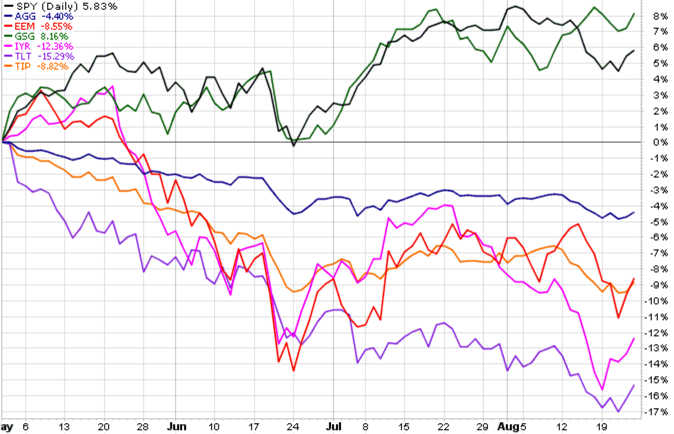
1. not influenced or controlled by others in matters of opinion, conduct, etc.; thinking or acting for oneself: an independent thinker.

2. not subject to another’s authority or jurisdiction; autonomous; free: an independent businessman.

3. not influenced by the thought or action of others: independent research.

4. not dependent; not depending or contingent upon something else for existence, operation, etc.

5. not relying on another or others for aid or support.

6. rejecting others’ aid or support; refusing to be under obligation to others.

7. possessing a competency: to be financially independent.

8. sufficient to support a person without his having to work: an independent income.

9. executed or originating outside a given unit, agency, business, etc.; external: an independent inquiry.

10. working for oneself or for a small, privately owned business.

11. expressive of a spirit of independence; self-confident; unconstrained: a free and independent citizen.

12. free from party commitments in voting: the independent voter.

13. Mathematics . (of a quantity or function) not depending upon another for its value.

I’ll leave it for you to decide what independence or independent thinking is not, but to offer a head start in this intellectual exercise I’ll suggest that it isn’t any of the above…

And finally, when I am thinking deeply about a meaning I like to look at other words of similar meaning to get a full picture. in the image below we view “independent” in the Visual Thesaurus, an interesting way to discover connections between words by revealing the way words and meanings relate to each other.

Image

If you have a question or comment to me directly, contact me. If you want to reply for everyone to share, reply below. If you like this post and want to share it with others, click on the Twitter, Linkedin, below.

Learning isn’t the same as being taught

I think an independent thinker learns what he or she wants to know, while others must be taught. For example, the most intelligent humans are those who didn’t need someone to teach them formally, they are the first to figure things out. Our society often relates the most learned people by what college they attended and how much of it, but what if someone instead read over 500 books on subjects like math, scientific research, psychology, and trading? You may consider that the developers of the best systems and the products we love didn’t necessarily create them at a university or after earning an Ivy league degree. They are instead the ones teaching the world new things that they are able to develop and understand in ways most people can’t. Others go to the classroom hoping to understand some of the basics taught by books and lectures. The greatest things are discovered by deep independent thinking.

Intelligence: has been defined in many different ways including logic, abstract thought, understanding, self-awareness, communication, learning, having emotional knowledge, retaining, planning, and problem solving.

Leaning isn't the same as being taught

Source: When the student is ready, the master appears. ~Buddhist Proverb

If you have a question or comment to me directly, contact me. If you want to reply for everyone to share, reply below. If you like this post and want to share it with others, click on the Twitter, Linkedin, below.

How did the market do this week?

Which market? Were you long or short it? And, was your time horizon just a week?

Image

Source: FINVIZ

Fear is the Current Return Driver

As I said in “Investor Sentiment is Bearish“, I’ll point out my observations about investor sentiment when it gets to an extreme and asymmetrically skewed to fear or greed. I pointed out the most recent AAII Investor Sentiment reading is bearish. Another simple gauge of investor sentiment is the Fear & Greed Index. As you can see, it hasn’t gotten to the extreme fear point, but fear has recently been the driver for stocks. Its reading was Greed just a month ago. Stock prices fell, investor sentiment shifted to fear. I believe many investors oscillate between the fear of missing out and the fear of losing money and I’ll share the observations as they occur as empirical evidence. When investor fear increases, eventually the last seller has sold and it pendulum swings back the other way.

Image

Investor Sentiment is Bearish

I will point out observations of investor sentiment when it gets asymmetric: tilted to one extreme or another. In doing so, we’ll see how investors tend to oscillate between the fear of missing out and the fear of losing money. That is, after stock prices go up, they’ll become complacent and overly optimistic. After prices go down, they’ll fear losing more money. Over time, I observe investors oscillating between these two fears. Or, you could call it fear and greed. The problem is, they feel the wrong thing and the wrong time. We’ll observe that through empirical evidence of the investment sentiment polls taken by AAII as it happens over time. Sometimes falling prices warrant some fear, and rising prices are a good thing. The point of our observations about the pendulum of sentiment is to show how they feel the wrong thing and the wrong time and most people don’t actually act on it well.
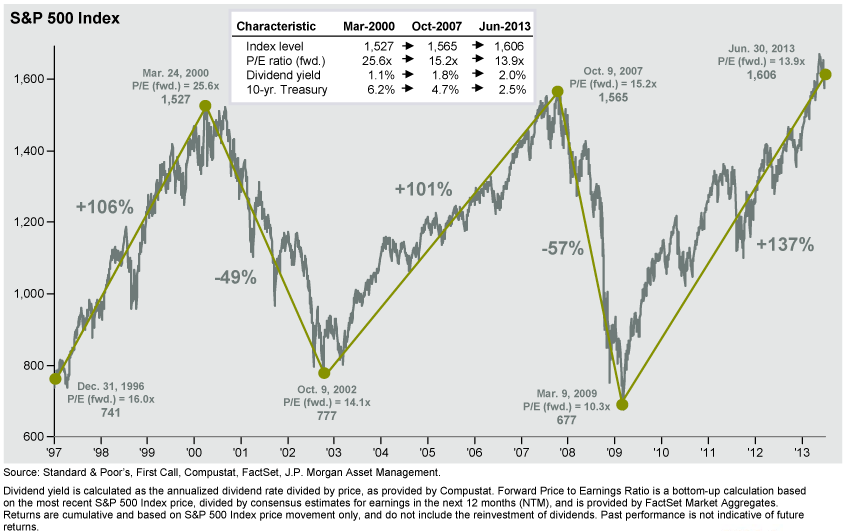
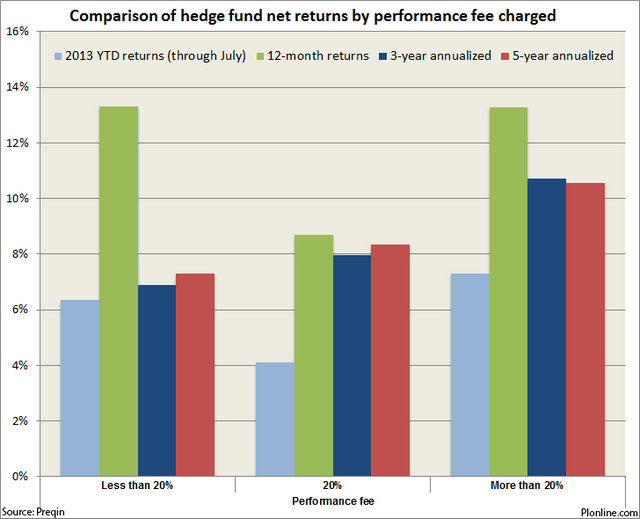
  • When investor sentiment gets extremely bearish, it’s usually after stocks have fallen and stocks often go back up.
  • When investor sentiment gets extremely bullish, it’s after stocks have gone up and stocks eventually decline.

The AAII Investor Sentiment Survey Results as of 8/21/2013 shows investors are bearish.

Image

This week’s AAII Sentiment Survey results:
  Bullish: 29.0%, down 5.5 points
  Neutral: 28.2%, down 9.1 points
  Bearish: 42.9%, up 14.7 points

Long-term averages:
  Bullish: 39.0%
  Neutral: 30.5%
  Bearish: 30.5%

The AAII Investor Sentiment Survey measures the percentage of individual investors who are bullish, bearish, and neutral on the stock market for the next six months; individuals are polled from the ranks of the AAII membership on a weekly basis. Only one vote per member is accepted in each weekly voting period. To learn more, visit: AII Investor Sentiment Survey